Table of Contents
Quick Summary
Tempo refers to the speed at which a piece of music is played. It is measured in beats per minute (BPM), which tells musicians how many beats occur in one minute. Different types of tempo in music, such as Largo, Andante, Moderato and Allegro, help communicate how slowly or quickly a composition should be performed. Understanding tempo helps musicians maintain timing, follow musical pieces accurately and express the intended mood of a song.
Have you ever noticed how a slow song can make you feel relaxed, while a fast track makes you want to get up and dance? The speed of a musical composition plays a big role in creating that experience.
Tempo in music refers to the speed or pace at which a musical composition is performed. It determines how quickly or slowly the beats occur and helps musicians understand the intended pace of a song.
For example, a romantic ballad may have a slow tempo to create a calm and emotional atmosphere. On the other hand, an energetic dance track usually has a faster tempo to encourage movement and excitement.
Tempo is important for singers, instrumentalists and composers because it helps them maintain a consistent pace while performing.
How Is Tempo Measured in Music?
Tempo is commonly measured in beats per minute (BPM). BPM indicates the number of beats played in one minute.
For instance:
- 60 BPM means 60 beats occur in one minute.
- 100 BPM means 100 beats occur in one minute.
- 120 BPM means 120 beats occur in one minute.
A lower BPM generally indicates a slower pace, while a higher BPM indicates a faster one.
Musicians often use a device called a metronome to practise at a consistent speed. A metronome produces regular beats at a selected BPM, helping learners maintain timing while playing an instrument or singing.
For beginners, practising with a metronome is a useful way to develop a sense of timing and understand how tempo works in real musical situations.
What Are the Different Types of Tempo in Music?
Musical compositions use different tempo markings to communicate their intended speed. These markings are traditionally written in Italian and appear in sheet music.
Here are some commonly used types of tempo in music:
Note: BPM ranges are approximate. Exact interpretations can vary depending on the musical tradition, composition and performer.
Ref: https://www.youtube.com/watch?v=6AsvYDgVzBc&t=1s
1. Largo – Very Slow
Largo indicates a slow and broad pace. It is often used in compositions that require a peaceful, serious or emotional expression.
Musicians playing a piece marked Largo should allow the notes to flow without rushing.
2. Adagio – Slow and Expressive
Adagio is a slow tempo that gives musicians room to express emotion through their performance. It is commonly associated with gentle, reflective and romantic compositions.
3. Andante – Walking Pace
Andante refers to a comfortable, moderate-slow pace, similar to the rhythm of walking. It is neither too fast nor too slow, making it useful for melodies that need a natural flow.
4. Moderato – Moderate Speed
Moderato indicates a medium pace. It is often used when a composition needs to feel steady and balanced without sounding overly relaxed or energetic.
5. Allegro – Fast and Lively
Allegro is a fast and lively tempo marking. It is commonly found in energetic classical compositions and pieces that require a cheerful or exciting feel.
6. Presto – Very Fast
Presto indicates a very fast pace. It requires musicians to play notes quickly while maintaining accuracy, control and rhythm.
What Is the Difference Between Tempo and Rhythm?
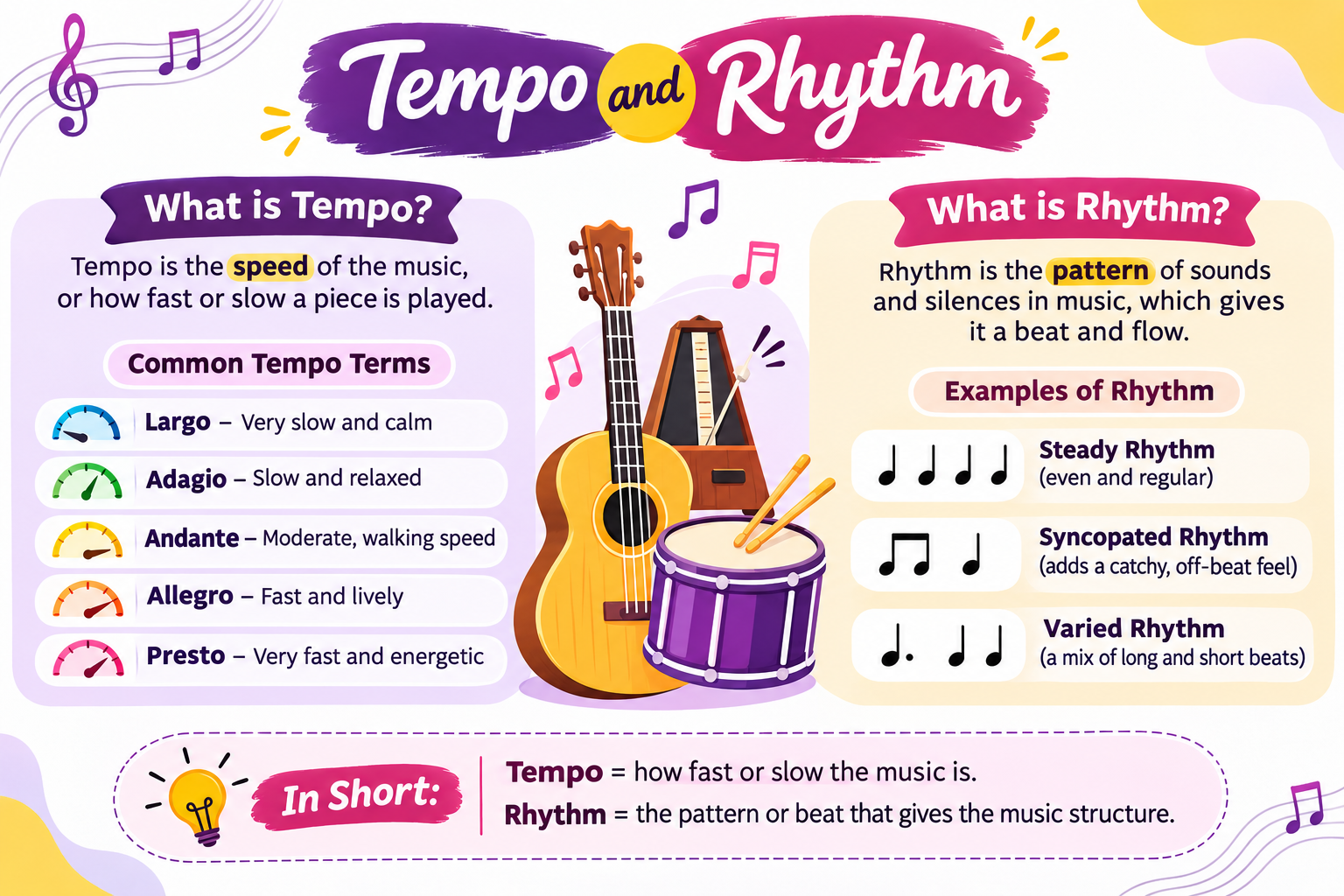
Tempo and rhythm are closely connected, but they do not mean the same thing. Beginners sometimes use these terms interchangeably, so understanding the difference is important.
Think of it this way: tempo tells you how fast to play, while rhythm tells you which notes to play and when.
For example, two songs can have the same BPM but sound completely different because their rhythmic patterns are different.
What Are Some Examples of Tempo in Music?
One of the easiest ways to understand tempo is to listen to songs with different musical speeds and moods.
Here are a few familiar examples:
These are listening examples to help you recognise different musical feels, rather than verified BPM measurements. A song's tempo can also be interpreted differently depending on its arrangement and performance.
When exploring what is tempo in music examples, try listening to a slow ballad followed by an upbeat dance track. Notice how the speed changes the overall energy and feeling of each song.
Fast Tempo vs Slow Tempo: How Do They Change a Song?
The pace of a composition influences how listeners experience it. A slow piece can create a reflective atmosphere, while a fast one can make a performance feel exciting.
Neither approach is better than the other. The right tempo depends on the emotion, style and purpose of the composition.
How Can Beginners Practise Tempo?
Learning to maintain a steady pace takes practice. Whether you are learning piano, guitar, violin or vocals, these simple exercises can help.
1. Start with a slow BPM
Set a metronome to 60 BPM and try clapping along with each beat. Once you feel comfortable, gradually increase the speed.
2. Count while playing
Count "1, 2, 3, 4" while practising a simple musical passage. This helps you stay aware of the beats instead of rushing through the notes.
3. Practise with familiar songs
Choose a song you know well and tap along with its beat. Try to maintain the same pace throughout the song.
4. Increase the speed gradually
Avoid jumping from a slow pace to a very fast one. Increase the BPM in small steps while maintaining accuracy.
5. Record your practice
Recording yourself can help you identify whether you are speeding up, slowing down or losing the beat during a performance.
With consistent practice, understanding tempo becomes easier and helps improve overall musical confidence.
Learn Music with Structured Guidance at Spardha School of Music
Understanding musical concepts becomes easier when you put them into practice. At Spardha School of Music, we offer live, one-on-one online music classes for children and adults.
Students can learn instruments such as piano, guitar, violin, keyboard, ukulele, flute and tabla, along with different vocal styles. Our lessons focus on building musical foundations, developing practical skills and helping students progress at a comfortable pace.
Whether you are a beginner learning to follow a beat or an aspiring musician working on more advanced compositions, structured lessons can help you develop your musical abilities.
Explore our courses at Spardha School of Music.
Conclusion
Tempo is one of the fundamental elements of music. It determines how quickly or slowly a composition is performed and influences the mood, energy and overall expression of a song.
Learning the different types of tempo in music, understanding BPM and practising with a metronome can help beginners develop better timing and musical control. The more you listen, practise and experiment with different speeds, the easier it becomes to recognise and perform musical compositions confidently.
Frequently Asked Questions
What is tempo in music in simple words?
Tempo is the speed at which a piece of music is played. It tells musicians how quickly or slowly they should perform a composition.
What does BPM mean in music?
BPM stands for beats per minute. It measures how many beats occur in one minute and is commonly used to indicate musical speed.
What are the four main types of tempo?
Four commonly recognised tempo markings are Largo (slow), Adagio (slow and expressive), Andante (walking pace) and Allegro (fast and lively).
What is a fast tempo called?
Allegro, Vivace and Presto are examples of fast tempo markings. Prestissimo indicates an extremely fast pace.
What is a slow tempo called?
Largo, Lento and Adagio are commonly used markings for slow musical compositions.
What is the difference between tempo and rhythm?
Tempo refers to the speed of music, while rhythm refers to the arrangement of sounds, beats and silences within a musical piece.
How do musicians measure tempo?
Musicians measure tempo using beats per minute (BPM). They can also use a metronome to maintain a steady pace while practising.
Can tempo change during a song?
Yes. A composition can become faster or slower during a performance. Musicians use tempo instructions such as Accelerando (gradually faster) and Ritardando (gradually slower) to indicate these changes.