Table of Contents
Have you ever heard a piano playing so magnificent that the music touched your soul? From grand concert halls and soulful studio recordings to warm melodies in small private settings, the piano is a wonderful instrument to connect with people. But you might not be aware that there are various types of pianos that exist today.
Although the world of music includes a variety of pianos, with their own unique sound, personality and purpose, there is one primary concern for most beginners, which type of pianos is best for me?
Checkout the below blog for the buying guide of Digital Pianos!

As with any type of product, selecting a new piano is not just a one-time purchase; it's a long-term investment. When you consider the history of pianos, how many keys they typically have, how the keyboard feels as you play, and what type of music you want to create, you begin to see the many factors involved in selecting a piano. So, to make your decision easier, we will provide a detailed, easy-to-read guide that outlines all of the different types of pianos and the qualities they offer.
1. A Quick Look Into Piano History
Before we explore the different types of pianos, let’s rewind a bit. The piano traces its roots to the early 1700s, invented by Bartolomeo Cristofori in Italy. The goal of Cristofori was to develop an instrument that would allow the performer to play both quiet and loud by their touch of the instrument. The modern piano is most like a version of Cristofori’s original creation, but there are other instruments like the Harpsichord and the Clavichord that were also used as inspiration for creating the modern piano.
Today, we have both Acoustic Pianos and Digital Pianos that are built on this concept of controlling the dynamic range of this incredible instrument. Throughout time, there have been many great composers and performers such as Wolfgang Amadeus Mozart, Ludwig van Beethoven, Frederic Chopin, Franz Liszt, Yiruma, and Lang Lang, and they have all relied on the use of this wonderful instrument to produce incredible music.
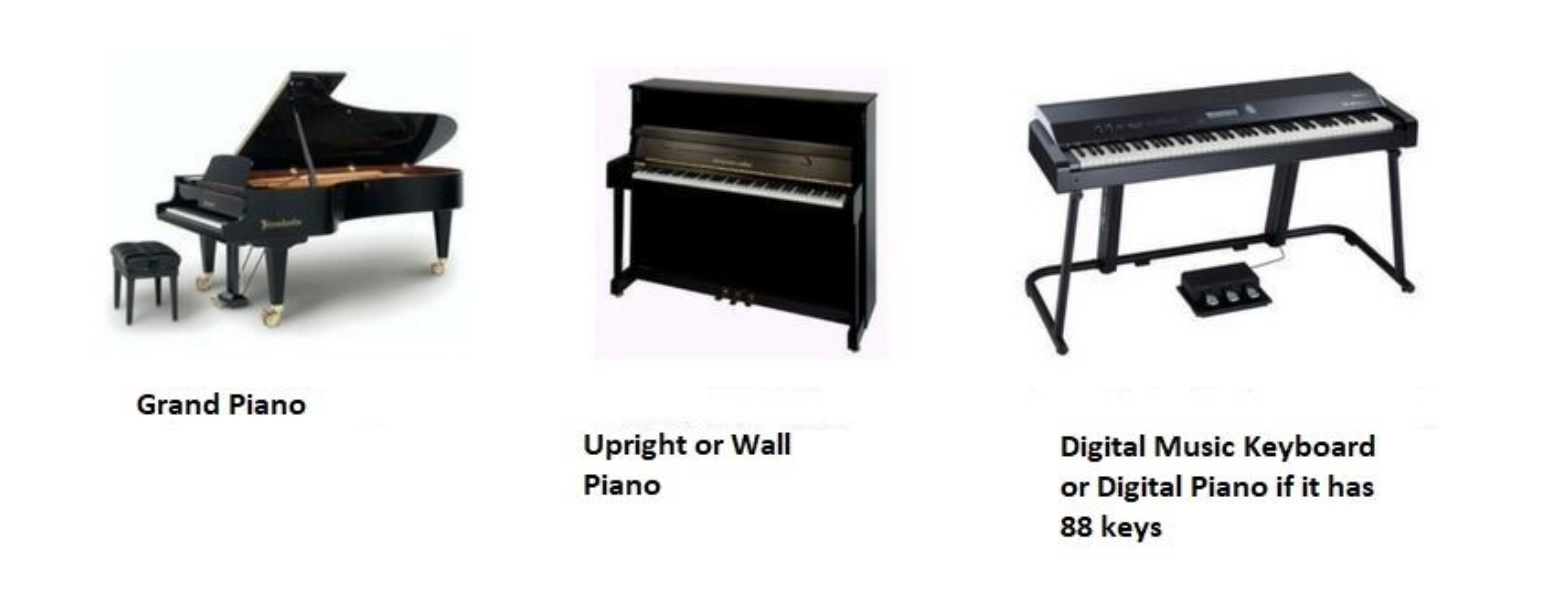
3 Major Types of Pianos
1. Grand Pianos: The Pinnacle of Musical Grandeur
When you imagine a grand concert hall and a spotlight shining on the stage, the first thing that comes to mind is a majestic grand piano. Often considered the king among the different types of pianos, a grand piano is both a musical masterpiece and a visual showstopper.
The frame and strings lie horizontally, and the lid opens upward, allowing sounds to travel freely across the room. This horizontal design also gives gravity the advantage in the mechanism, offering faster key response and exceptional control.
Features of a Grand Piano
- Horizontal string alignment
- Lid opens upwards
- Ranges from baby grand (approx. 5 ft) to concert grand (9 ft+)
- Offers unmatched tonal depth and resonance
Pros
- Superior sound quality
- Smooth and responsive key action
- Aesthetic beauty as it is considered symbol of luxury and sophistication
- Widest dynamic range for professional performance
You can checkout the below blog to understand the piano scales better!

2. Upright Pianos: Portable Design for Everyday Music
While the traditional grand piano can be considered the "king" of the piano family, undoubtedly upright pianos have served as the "working horse". These musical instruments are practical and economical, while at the same time creating an excellent environment for learning to play, and they fit well into tight spaces or small homes.
Due to their vertical string configuration of an upright piano this makes them small and efficient instrument. There are primarily two main types of upright pianos.
Console Pianos
- Height: 40–44 inches
- Great for home use
- Beautiful cabinets
- Warmer but less resonant than larger models
Studio Pianos
- Height: 45–48 inches
- Designed for music schools and studios
- Better key action and deeper tone
Features of Upright Pianos
- Vertical frame and strings
- Stands 3–5 ft tall
- Perfect for homes, teaching rooms, and practice spaces
- Modern upright actions are nearly as responsive as some grands
Pros
- Saves space
- More affordable than grand pianos
- Warm, pleasing sound
- Easy to move and maintain
3. Digital Pianos: Technology Meets Tradition
Digital Piano trends are becoming increasingly popular in today’s modern market; they combine traditional piano sounds with modern technology making them perfect for beginner players, travellers, tech enthusiasts and all those wishing to have some flexibility when performing.
These types of pianos use high-quality sound sampling of acoustic pianos to reproduce the tones of these instruments. Many Digital Piano models come equipped with weighted keys which provide a very realistic feel, similar to what you would get from playing an acoustic instrument. The attractiveness of digital pianos lies in their portability and ability to be used quietly (through headphones).
Features of Digital Pianos
- Uses advanced sampling technology
- Weighted or semi-weighted keys
- Comes in console or portable keyboard formats
- Extra features: metronome, recording, Bluetooth, headphone output
Pros
- Highly portable
- No tuning required
- Volume control + headphone mode
- Extra sound options and learning tools
You can also explore the below blog to check out beginner's guide to buying piano/keyboard!

3. Other Notable Types of Pianos
1. Hybrid Pianos
Hybrid pianos blend acoustic mechanisms with digital sound engines. You get the feel of a traditional piano with the modern features of a digital one. Think of it as the future of pianos, responsive, expressive, and smart.
2. Stage Pianos
Stage pianos are lightweight electric pianos designed to be used by musicians in live performances. As such, they are extremely reliable and come with a variety of performance and sound producing capabilities. These types of pianos are ideal instruments for both gigging musicians and recording artists who want a high-quality, reliable electric instrument on stage.
3. Keyboards
When it comes to portability and affordability, keyboards score high among your instrument options. Most keyboard models will feature multiple sound presets, allow you to play along with drum patterns, provide built-in learning functions, and have touch-sensitive keys. Keyboards are very suitable for:
- Beginners
- Children
- Travellers
- Casual learners exploring piano keyboard keys
4. Synthesizers
These are advanced electronic instruments that allow you to create totally new sounds. Popular in electronic, pop, and experimental music, synthesizers open a world of creativity beyond the traditional piano tone.
4. Choosing the Right Types of Pianos for Your Needs
If you want to make in informed decision, here are a few important points you should consider:
i. Learning at Home
If you're beginning your musical journey, comfort and convenience should be your top priorities. A digital piano with weighted keys, graded hammer action, and headphone support makes home practice smooth and stress-free. Weighted keys help you build proper finger strength and technique, while the headphone option allows you to practice anytime without disturbing anyone. These pianos are compact, budget-friendly, and packed with features like metronomes and learning modes, perfect for consistent daily practice.
ii. Conservatory or Classical Training
For serious learners preparing for exams or classical repertoire, an upright or grand piano is essential. Their acoustic resonance, natural vibrations, and pedal control help develop advanced skills such as articulation, dynamics, and expressive playing. These pianos also offer a more realistic touch, allowing students to refine professional-level technique.
iii. Professional Performance
Performers and concert pianists require grand pianos because of their unmatched tonal richness, dynamic range, and flawless responsiveness. Their horizontal action delivers the precision needed for complex compositions and large venues.
iv. Composing and Recording
If you’re a music producer or songwriter, digital pianos with MIDI/USB connectivity are ideal. They integrate effortlessly with DAWs, enabling recording, layering, and editing.
v. Teaching Studios
Teaching environments need instruments that endure daily use. Acoustic upright pianos are reliable, sturdy, and consistent—making them perfect for student practice and demonstrations.
Read the blog for the tips to improve sight reading!

How Many Keys Does a Piano Have?
A standard piano has 88 keys including 52 white and 36 black. This is the ideal number for students, performers, and professionals. Some keyboards may come with 61 or 76 keys, but for long-term learning, 88 keys are the best.
How Much Should You Spend on a Beginner Piano?
Piano prices in India vary, especially for beginners.
Entry-Level Digital Pianos (₹15,000 – ₹40,000)
- Basic weighted keys
- Good for practice
Mid-Range (₹40,000 – ₹80,000)
- Better tone
- More features
Premium Digital (₹80,000 and above)
- Advanced sound engines
- Excellent key feel
- Full connectivity
If you’re looking for reliable beginner options in India, brands like Yamaha, Casio, Roland, and Kawai are trusted worldwide.
Explore some easy beginner lesson to play blues on Piano!

Why Join Spardha’s Piano Class Online?
If you want to be a piano expert, Spardha has got you covered. Our piano courses are friendly and are handled with an experienced faculty who can guide you through every foundational concept of playing piano. From assisting you to understand beats, rhythm, dynamics, and time signature, you will learn chords and the basics of music theory.
Learning Outcomes You Can Expect
- Identify notes on the instrument
- Play the basic rhythms and pieces with steady pulse and flow
- Read sheet music and staff notations effectively
- Understand the basic touch controls in playing
- Play different rhythm techniques
- Tune 2 and 4 notes harmonies with the use of ties and dotted rhythms.
Final Thoughts
Choosing the right types of pianos is an emotional and exciting decision. You’re not just buying an instrument, you’re opening the door to creativity, expression, and musical growth. From understanding the types of pianos to analyzing budget, space, and sound preferences, every step helps you get closer to your dream musical partner.
The right piano will inspire you, challenge you, and make you fall in love with music every single day. So take your time, explore your options, and pick the piano that feels like “the one.” Also, if you want to be the best pianist, trust Spardha School of Music. You can learn piano online from the comfort of your home. Their expert mentors guide you step by step, whether you’re a complete beginner or looking to improve your skills.
Frequently Asked Questions
Q1. What are the best types of pianos for beginners in India?
A digital piano with 88 weighted keys is usually the best choice due to affordability and learning features.
Q2. How many keys does a piano have?
A full-size piano has 88 keys, ideal for long-term learning.
Q3. Can I learn piano on a keyboard?
Yes, but choose a keyboard with touch sensitivity and preferably weighted keys for better technique.
Q4. Which type of piano is best for classical music?
Grand pianos and high-quality upright pianos offer the best response for classical training.