
Table of Contents
Quick Summary
Tamil film music has produced some of the most innovative composers in the history of Indian cinema. The tradition runs from M.S. Viswanathan's melodic golden-era compositions through Ilaiyaraaja's genre-defining work in the 1970s and 80s, A.R. Rahman's global breakthrough in the 90s, and the contemporary dominance of Anirudh Ravichander. What connects these composers across generations is a willingness to absorb influences from classical Carnatic music, Western orchestration, folk traditions, and electronic production without losing a distinctly Tamil sensibility. The result is a body of film music that has consistently punched above its regional weight on the national and international stage.
Tamil cinema has always had a complicated relationship with the word "regional."
The films come from Chennai, but the language is Tamil. Moreover, their music has, repeatedly and without apology, walked onto the national and global stage and refused to be categorised as anything less than significant. That's not an accident. It's the direct result of a lineage of Tamil music directors who treated their craft with a seriousness that produced work capable of travelling across language barriers.
Ilaiyaraaja changed what Indian film music could sound like in the 1970s, whereas A.R. Rahman made the world pay attention to Indian film music in the 1990s. Lately, Anirudh Ravichander is doing something similar for the streaming-era generation. Between them, and among the composers who built the tradition before and alongside them, Tamil film music has a body of work that deserves to be understood as a whole rather than a collection of individual hit songs.
Tamil Music Directors List: The Defining Figures
1. Ilaiyaraaja
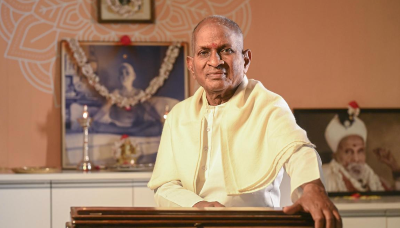
Any serious Tamil music directors list that doesn't begin with Ilaiyaraaja is working from the wrong premise.
Born in 1943 in a small village in Theni district, Ilaiyaraaja came to Chennai with minimal and formal resources and went on to compose music that would define Tamil cinema for the better part of two decades. His output across the 1970s and 1980s is staggering in both volume and quality, scoring over a thousand films, and a significant portion of them contain compositions that are still performed, covered, and studied today.
What made him the best music director in Tamil cinema of his era wasn't just melody, though the melodies are extraordinary. It was his integration of Western harmonic language with Carnatic classical structures in a way that neither tradition had attempted before. He studied Western classical music independently, absorbing theory from recordings and textbooks, and then applied that harmonic understanding to Indian melodic sensibility. The result did not actually have a real precedent.
Thus, his 1993 collaboration with the Western classical ensemble the London Philharmonic Orchestra on Nothing But Wind demonstrated that this wasn't pastiche. He understood Western orchestration well enough to write for it from the inside rather than simply borrowing its surface.
Songs like Ninaithale Inikkum, Engeyo Ketta Kural, and Pani Vizhum Malarvanam sit permanently in Tamil cultural memory. But the breadth of his catalogue means that every listener has their own private Ilaiyaraaja, the composer who made the song that mattered to them at the moment when it needed to matter the most.
2. A.R. Rahman
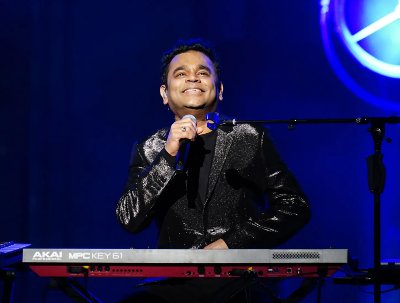
The name that took Tamil film music to a global audience. Rahman's debut score for Mani Ratnam's Roja in 1992 was immediately understood as something different. Not just a good film score but a compositional approach that hadn't been heard in Indian cinema before.
People say he stands out as a composer. You must know why:
- He was the one who brought electronic production into Tamil film music at a time when most composers were still working primarily with live orchestras.
- He layered Sufi and devotional influences over contemporary pop structures.
- He recorded vocals in ways that treated the human voice as a sonic texture rather than just a melodic instrument.
- And he did all of this while producing songs that were immediately accessible to audiences with no musical training at all, which is the hardest part of the combination to achieve.
Roja, Bombay, Dil Se, Lagaan, the progression from Tamil cinema to national cinema to international recognition followed a creative trajectory rather than a commercial calculation. His Oscar wins for Slumdog Millionaire in 2009 were a moment of institutional recognition that the music had already made the argument for years.
He continues composing, and his best recent work demonstrates that the restlessness that defined his early career hasn't settled into formula. Among the top Tamil music directors of any era, his claim is the most internationally documented.
3. M.S. Viswanathan
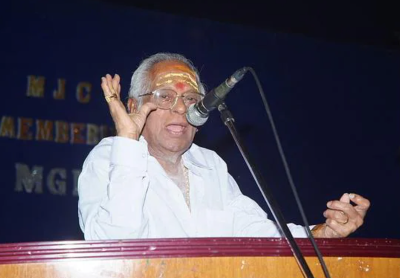
Before Ilaiyaraaja and Rahman, there was M.S. Viswanathan. Known affectionately as MSV, he composed across four decades of Tamil cinema from the 1950s through the 1980s and established the melodic foundation that later composers would build on or react against.
His partnership with T.K. Ramamurthy through the 1960s produced some of the most beloved songs in the Tamil classical film music canon. The orchestral arrangements were Western in their instrumentation but entirely Indian in their sensibility, a combination that felt luxurious and accessible.
MSV's genius was pure, indelible, and immediately memorable melody of the kind that lodges in the ear and refuses to leave. Songs like Naan Paadum Mouna Raagam and Engirundho AzhaikkiRadhu demonstrate this. These are examples of compositions that sound simple on first hearing and reveal more craft with each return. He was awarded the Padma Bhushan in 2012, recognition that arrived late but was uncontested.
4. Yuvan Shankar Raja
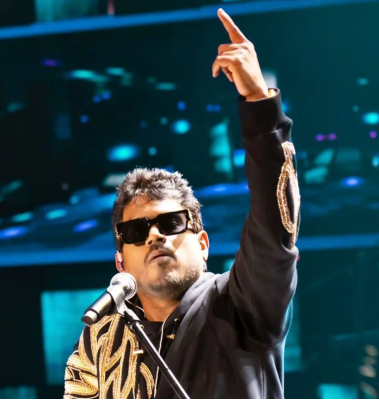
Ilaiyaraaja's son, and the composer who owns the sound of Tamil youth cinema in the 2000s.
Yuvan emerged precisely when Tamil cinema was forging a new connection with its young audience. The music he crafted for films like Kaakha Kaakha, Ghilli, and Vinnaithaandi Varuvaayaa captured a very specific generational pulse, i.e. restless, romantic, and distinctly urban. Crucially, it gave voice to a raw, unresolved melancholy that didn't demand neat, happy endings.
His signature blend of guitar-driven arrangements and keen romantic instinct allowed him to pivot seamlessly between high-energy action sequences and intimate character beats. This gave directors like Gautham Vasudev Menon a precise sonic vocabulary, one that proved integral to the emotional weight of their films. Instead of functioning as standalone pop songs, every track on the album actively advances the film's core emotional argument.
The shadow of his father's reputation is something Tamil music writers bring up about Yuvan regularly. His output has been inconsistent. But at his best, he's produced music that belongs to the conversation about the top music directors in Tamil cinema without qualification.
5. Harris Jayaraj
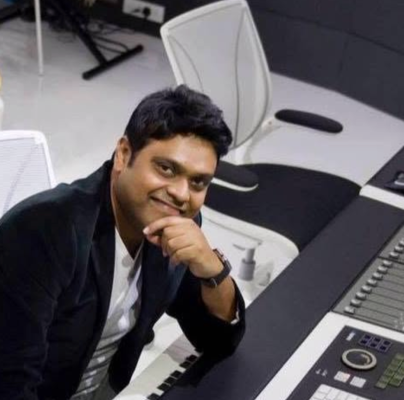
Harris Jayaraj and Yuvan Shankar Raja occupied adjacent creative territory in the 2000s and were often compared because they were working with similar directors with similar audience expectations. The comparison is useful up to a point because beyond it, they're distinct.
Harris brought a more cinematic, sweeping quality to his scores. The range across Kaadhal, Unnale Unnale, Anniyan, and Ghajini tells the whole story. Across just those four films, Harris Jayaraj proved he was as comfortable writing intimate acoustic guitar arrangements as he was scoring massive, orchestral action cues.
His background as a guitarist shaped his compositional voice in audible ways. The guitar in his scores is a structural element, not mere decoration. Because he understands Western harmony as a performer rather than just a theorist, his arrangements carry a natural fluidity that purely academic knowledge rarely produces.
6. G.V. Prakash Kumar
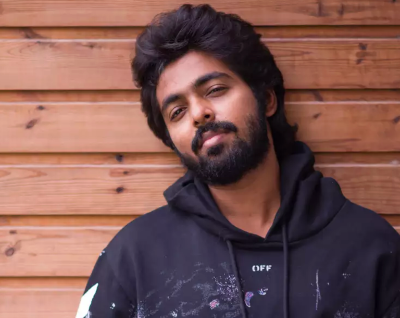
M.S. Viswanathan's grandson, and a composer who has built a career on his own terms rather than through that lineage.
GVP started young and has been extraordinarily prolific, which means the catalogue is uneven and the scores feel rushed and considered. Deiva Thirumagal, Neram, and Saivam demonstrate a composer with genuine emotional intelligence, someone who understands that the job is serving the film's story rather than showcasing compositional ability at the story's expense.
His work in independent Tamil cinema alongside his commercial output shows range that the prolific count alone doesn't communicate.
7. Anirudh Ravichander
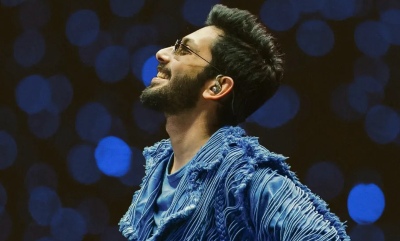
The composer who defines contemporary Tamil film music for the streaming generation. Period.
Anirudh's debut score for 3 in 2012 announced someone with an instinct for melody and production that was immediately contemporary without being imitative. Why This Kolaveri Di was the song that most people noticed, but the album as a whole demonstrated compositional thinking rather than just a single viral moment.
Since then, he has given Vedhalam, Kabali, Vikram, Leo, and Jailer. The association with Rajinikanth’s films has made him the composer of the biggest Tamil spectacles of recent years. This man has handled that scale without losing the melodic sensitivity that his earlier, smaller-scale work showed.
His production sound is very much of its era. It ranges from electronic to bass-heavy, influenced by global pop and hip-hop production, but the melodies underneath the production are built with more craft than the surface suggests. That's what separates a composer from a producer, and Anirudh has made his stand consistently.
8. D. Imman
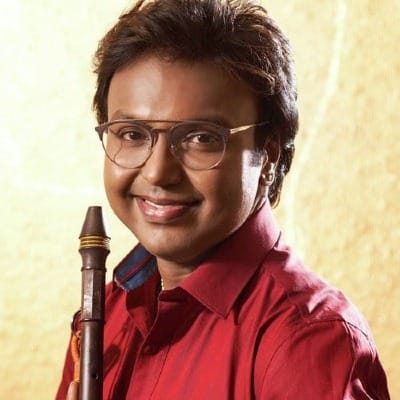
Consistency and emotional clarity are what D. Imman brings to Tamil cinema, and those qualities have made him one of the most reliable composers working today.
His scores for Vijay Sethupathi's films and long collaboration with director Hari have demonstrated a composer who understands how to support a scene without overpowering it. The emotional register he's most comfortable in is warmth and sincerity, which suits the family-oriented commercial films he scores most often.
Viswasam, Thadam, and Soorarai Pottru (the last one in particular) contain some of his finest work. Alongside this is the national award-winning song Veyyon Silli, standing as one of the more quietly devastating compositions in recent Tamil cinema.
9. Vidyasagar
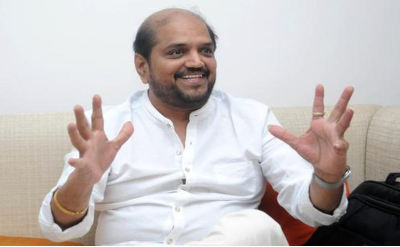
Vidyasagar's peak came in the early 2000s and produced two scores that are a part of any serious conversation about Tamil film music: Pithamagan and Kannathil Muthamittal.
Kannathil Muthamittal, scored for Mani Ratnam's film about the Sri Lankan civil war and its impact on Tamil families, contains music that carries the weight of the subject without being heavy-handed about it. The lullaby quality of several tracks creates a devastating counterpoint to the film's subject matter; its compositional intelligence speaks of a high order.
He's worked less frequently in Tamil cinema in recent years, but the body of work he produced during his peak period holds up completely.
10. Santhosh Narayanan
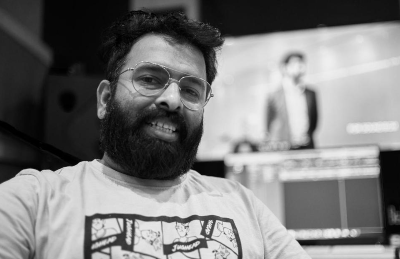
The most contemporary entry on this list and the composer most explicitly engaged with the intersection of Tamil culture and global music production.
His work with director Pa. Ranjith, i.e. Kabali (before Anirudh took over portions), Kaala, Sarpatta Parambarai has given him a platform for music that carries explicit political and social content rather than simply scoring drama. The Sarpatta Parambarai album is arguably his finest work. It’s a score built around the boxing world of 1970s North Chennai using local folk music, soul, and funk in a way that feels culturally specific and cinematically alive.
He's the most interesting younger composer in Tamil cinema right now when it comes to creative ambition.
What These Composers Share
Despite spanning vastly different eras, these composers are defined by their distinct sonic signatures and unique relationships to tradition and contemporary influence. Across the top 10 Tamil music directors on this list, one common thread holds: a shared commitment to treating film music as intentional narrative composition rather than disposable background noise.
When these composers hit their mark, removing the score alters the film’s core emotional meaning and not just its backdrop. That is the true benchmark. Few reach it; these composers have championed it.
Learn Music With the Depth Like These Composers Brought at Spardha
The genius of the finest Tamil film scores is built on rigorous training. Classical foundations, a trained ear, and structured musical education empower a composer to make deliberate, informed choices rather than relying on pure intuition.
At Spardha School of Music, our vocal and instrumental instructors teach with that same depth. Whether you're learning Hindustani vocals, guitar, keyboard, or any other instrument, the curriculum builds genuine musical understanding alongside technical skill. Live, 1-on-1 online sessions with certified instructors give you the kind of focused, personalised development that produces real progress.
Book a free trial class at Spardha School of Music today and start building the musical foundation that these composers spent years developing.
Conclusion
There isn’t a single "greatest" music director in Tamil cinema; there is a legacy. It moves from MSV's soaring melodies to Ilaiyaraaja's structural brilliance, through Rahman's global vision, and into a new generation constantly redefining the soundscape.
Decade after decade, these artists have elevated their craft, producing a catalogue that far outgrows the reductive "regional" label. That kind of lasting impact isn't an accident of geography; it is the direct result of serious musicians refusing to treat film music as anything less than high art.
Frequently Asked Questions
Who is considered the greatest Tamil music director of all time?
Ilaiyaraaja holds the broadest consensus for historical impact, having composed over a thousand film scores and fundamentally changed the sound of Tamil cinema across two decades. A.R. Rahman has the strongest international profile and the most documented global influence. Among serious listeners and musicians, both names are cited without contradiction; they represent different but equally significant contributions.
Who are the top 10 Tamil music directors active today?
Among currently active composers, Anirudh Ravichander, D. Imman, Santhosh Narayanan, and G.V. Prakash Kumar are the most consistently prominent in contemporary Tamil cinema. But Yuvan Shankar Raja remains a significant presence when working on the right projects.
What makes Tamil film music different from Bollywood music?
The Carnatic classical foundation that runs through Tamil music gives it a distinct melodic sensibility. Tamil composers have historically been more willing to integrate folk traditions exclusive to Tamil Nadu into their film scores. The tradition of composers with serious classical training, rather than primarily commercial backgrounds, has also shaped how Tamil film music approaches structure and arrangement.
Has any Tamil music director won international awards?
A.R. Rahman won two Academy Awards for Slumdog Millionaire in 2009, making him the most internationally decorated Indian film composer in history. He has also won multiple Grammy Awards and Golden Globe Awards. His primary association is with Tamil cinema, though his later career has been pan-Indian and international.
Which Tamil music director is best for someone new to Tamil film music?
Ilaiyaraaja's 1970s and 1980s catalogue is the most rewarding entry point for serious musical listening. For contemporary Tamil film music, the Vinnaithaandi Varuvaayaa album by Yuvan Shankar Raja and Anirudh's 3 and Vikram scores are strong starting points. On the other hand, A.R. Rahman's Roja and Bombay remain among the most accessible introductions to what Tamil film music is capable of at its peak.
Can learning music help me understand and appreciate Tamil film compositions better?
Significantly. Understanding basic concepts like scale, rhythm, and melodic structure changes how you hear a composition: you move from passive appreciation to active listening. Students who develop even basic musical knowledge frequently report that their relationship with film music becomes richer because they can identify what specifically makes a particular passage work.