Table of Contents
Quick Summary
Choosing between online and offline dance classes depends on your goals, schedule, learning style, and budget. While offline classes offer hands-on guidance and a studio environment, live online dance classes provide flexible schedules, personalized instruction, and access to experienced teachers from anywhere. This guide compares both formats to help you decide which is right for you and explains why Spardha School of Music's live 1-on-1 online dance classes are a great option for kids and adults.
This question doesn't have one universal answer. And any article that tells you it does is selling you something.
The appropriate question is: the right format suitable for your specific situation, schedule, location, learning style, and goals? Those variables change the answer significantly. A professional dancer training six days a week has different needs from a parent looking for weekend classes for their nine-year-old, or a working adult who wants to learn Bollywood dance from home.
This article breaks down both formats, covering where each one genuinely excels and where it falls short. By the end, you'll know which direction makes more sense for you, not just which one a dance school wants you to choose.
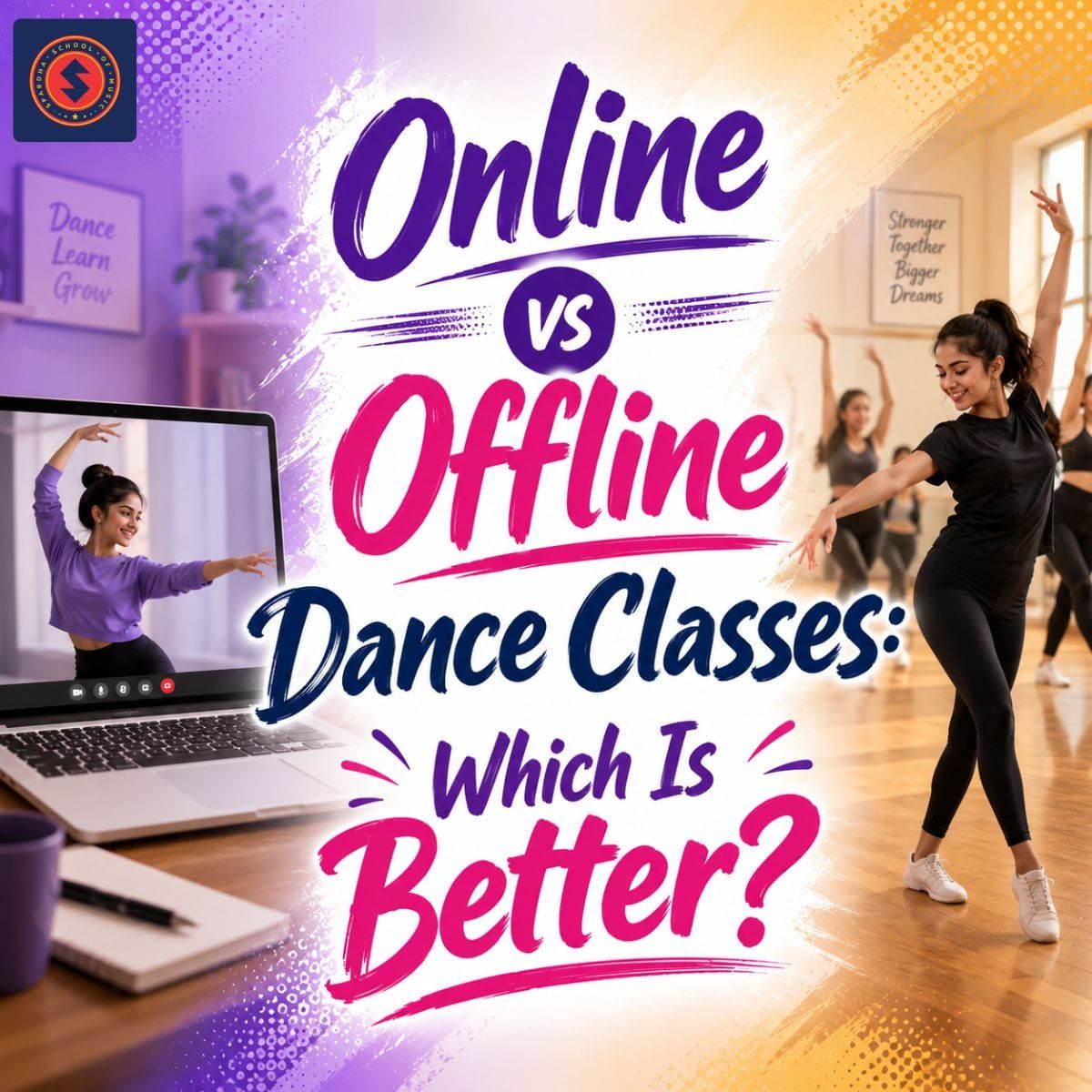
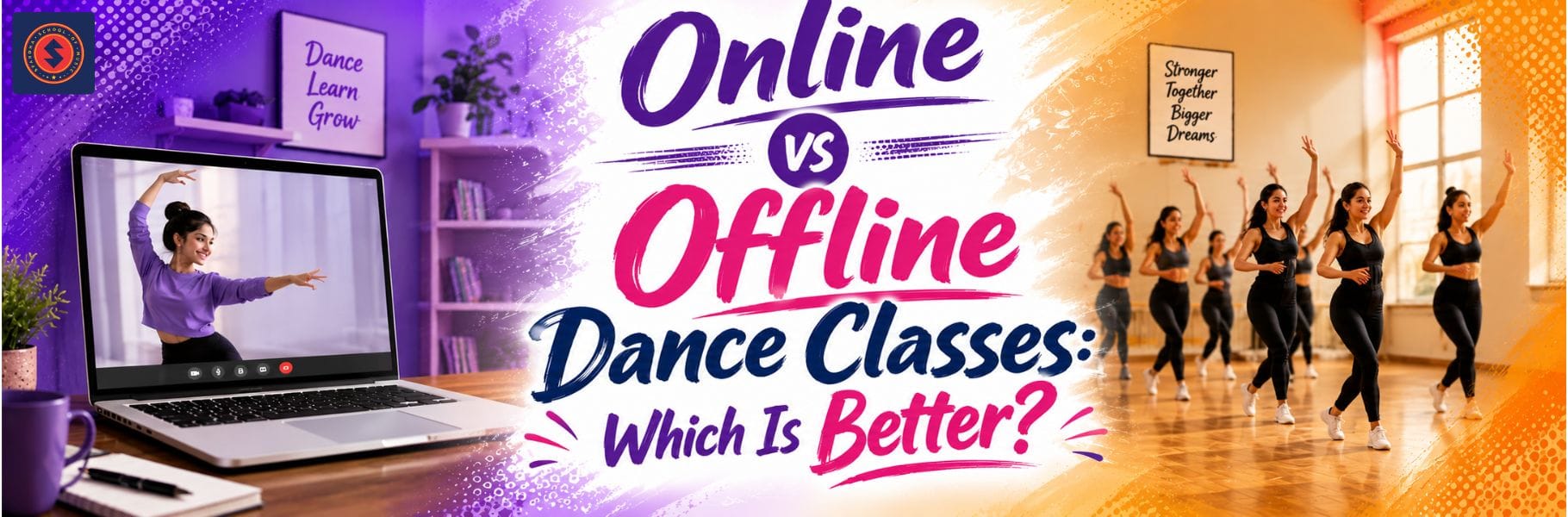
Online vs Offline Dance Classes: Quick Comparison
What the Comparison Actually Involves
Online dance class formats have changed significantly in the last five years. The category now ranges from pre-recorded video libraries you watch passively to live group sessions over video call to fully personalised 1-on-1 instruction with a certified teacher supervising you in real time.
Offline dance classes range from large studio group sessions with 20 or more students to small groups of 5 to 8 students, to private in-person instruction.
These distinctions matter because comparing the worst version of one format against the best version of another is dishonest. A pre-recorded online tutorial compared to a private in-person lesson isn't a fair fight. But a live, 1-on-1 online class compared to a live, 1-on-1 in-person class is a genuinely interesting comparison — and that's the one worth making.
Where Offline Dance Classes Have a Genuine Advantage
Let's begin here, because the honest version of this comparison has to acknowledge what in-person instruction does well.
1. Hands-on Posture Correction
Best for: Beginners, Bharatanatyam students, Kathak students
Why it matters: Offline instructors can physically correct posture, hand gestures, foot placement, and body alignment. This is especially helpful in the early stages of learning when students are developing proper technique and muscle memory.
2. Studio Learning Environment
Best for: Kids, group learners, performance preparation
Why it matters: A dance studio creates a focused learning atmosphere where students stay motivated, interact with peers, and gain confidence through regular practice and performances.
3. Fewer Distractions
Best for: Young learners and students who struggle with concentration
Why it matters: Studios reduce interruptions from phones, family members, and household activities, allowing students to remain focused throughout the class.
Where Online Dance Classes Work Better
Now, the other side, with equal honesty.
Access to Better Teachers
Best for: Students living in smaller cities, NRIs, and learners looking for specialized dance training.
Why it matters:Online dance classes remove geographical barriers, allowing students to learn from certified Bollywood, Bharatanatyam, and Kathak instructors from anywhere. Instead of being limited to nearby studios, you can choose experienced teachers who match your learning goals.
For NRI families wanting their children to learn Indian classical dance while living in the UK, Canada, or the US, this isn't a minor advantage. It's often the only viable path to genuinely high-quality instruction in the tradition they want.
Scheduling That Actually Fits Real Life
Best for: Working professionals, students, parents, and busy learners.
Why it matters:Online dance classes offer flexible scheduling, making it easier to learn before or after work, on weekends, or around school hours. This convenience helps students maintain consistent practice without disrupting their daily routine.
Consistent learning over six months at a convenient time will always outperform sporadic attendance at an inconvenient one.
1-on-1 Attention at Lower Cost
Best for: Beginners, children, and learners who prefer individual guidance.
Why it matters:Live one-on-one online dance classes provide personalized instruction with real-time feedback on posture, rhythm, footwork, and expressions. This focused attention helps students progress faster than in large group classes.
Online instruction changes this economics. The teacher doesn't need a studio. There's no overhead, no commute, and no room booking. Live 1-on-1 online classes are typically priced closer to offline group classes while providing the full attention of individual instruction. For families comparing what their money actually buys, that's a meaningful difference.
The Comfort Factor for Adults
Best for: Adult beginners, hobby learners, and students who feel self-conscious in group classes.
Why it matters:Learning from home creates a comfortable, stress-free environment where students can practice confidently without the pressure of performing in front of others. This often leads to better participation, greater confidence, and improved consistency
A live online class removes that barrier. You're in your own space, visible only to your instructor. There's no audience for the mistakes that are a normal part of learning. For adult hobbyists, this comfort is often the difference between starting and continuing versus starting, feeling embarrassed, and quietly stopping.
Where to Learn Dance Online: What to Actually Look For
Where to learn dance online matters as much as which format you choose. The online category is wide, and the quality varies enormously. Here's how to evaluate what you're looking at.
Live instruction over pre-recorded content. A pre-recorded video library is not a class. It's a collection of tutorials. Real instruction means a teacher who can see you, respond to what they observe, and adjust the lesson based on your actual progress. If a platform doesn't offer live sessions, it's not offering classes.
Class size relative to age. For children under ten, the maximum effective online group size is three to four students. Beyond that, the instructor can't adequately monitor each child, and the children can't adequately focus. 1-on-1 is almost always better at this age. For older students and adults, slightly larger groups work, but anything over ten students in an online format is more of a demonstration than a class.
Instructor certification and background. Ask specifically about the instructor's training and experience. A good online dance school has vetted its teachers. Know what that vetting process involves before you sign up.
Trial access before commitment. Any credible platform will offer a trial class or a first session before asking for a subscription or course payment. If there's no trial option, treat that as a flag.
The Honest Verdict
For most learners in most situations, a live, 1-on-1 online dance class with a certified instructor offers better outcomes than a standard offline group class.
Not because online is inherently superior as a format, but because it typically delivers better teacher access, genuine scheduling flexibility, more individual attention, and a learning environment that removes the social pressure that stops a significant number of people from sticking with it.
The exceptions are real. While very young children who need physical guidance and struggle with screen-based attention do better in person initially, pre-professional dancers training at a serious level benefit greatly from the studio environment and its community. Students in cities with access to genuinely excellent teachers at convenient times and reasonable prices should take that in-person option.
For everyone else, the practical advantages of a live online class from a quality platform outweigh the studio experience by a meaningful margin.
Start Your Dance Journey With Spardha
At Spardha School of Music, every dance class is a live, 1-on-1 session with a certified instructor. Our Bollywood Dance course is open to students aged six and up, as well as adults of all experience levels.
No pre-recorded substitutes and no large groups where a student disappears. It’s all about real instruction, real feedback, at a schedule that fits your life.
Book a free trial class today at Spardha School of Music. Your first 30-minute session is completely free, giving you the perfect opportunity to see if our format, instructor, and approach are the right fit for you.
Frequently Asked Questions
Is an online dance class as effective as an offline one?
A live, 1-on-1 online class with a certified instructor is comparably effective to a private in-person lesson for most learners and most dance styles. The difference becomes more significant in the earliest stages of classical dance training, where physical correction by a teacher in the room accelerates the development of correct body alignment and muscle memory.
Where to learn dance online if I want Indian classical training specifically?
Look for platforms that specifically list certified instructors in the tradition you want. Hindustani classical dance, Bharatanatyam, and Kathak all require instructors with specific gharana or institutional training. Generic dance platforms often don't vet for this. Platforms like Spardha that specialise in Indian music and dance instruction with certified teachers are a better fit.
Can children learn to dance online effectively?
Yes, with the right format. Children under six or seven need 1-on-1 instruction and shorter sessions. Older children from eight upward do very well in a structured online environment with an engaged instructor. The key factor is instructor attention, which means class size matters significantly.
What equipment do I need for an online dance class at home?
A cleared space of approximately two metres by two metres, a device with a camera positioned to show your full body, a stable internet connection, and comfortable clothing. No specialist flooring, barres, or studio equipment is required for most dance styles taught at beginner and intermediate levels.
How do I choose between a live online class and a pre-recorded dance course?
Live instruction with a real teacher watching you is categorically different from a pre-recorded tutorial. The latter can supplement learning but cannot replace it. If you actually want to develop technique rather than passively follow along, live instruction is the only option that provides the real-time correction that learning a physical skill requires.
How long does it take to learn to dance online?
With consistent weekly instruction and daily practice of 15 to 20 minutes between sessions, most beginners notice clear, measurable progress within six to eight weeks. A full beginner choreography piece is achievable within three to four months. The pace depends almost entirely on the frequency of practice between sessions rather than the number of classes alone.