Table of Contents
A good music teacher can shape how your child feels about music for the rest of their life. A mediocre one can make them quit within six months.
That's not an exaggeration. The right music teacher skills are the difference between a student who stays curious and motivated and one who associates practice with frustration. Most parents evaluate teachers on price, availability, or a friend's casual recommendation. None of those tells you whether the person can actually teach. This list breaks down the ten skills that genuinely matter, split between the technical expertise every good teacher needs and the human qualities that make lessons actually work.
Why Music Teacher Skills Matter More Than Credentials
A music degree tells you someone studied music. It doesn't tell you whether they can explain a concept in three different ways until it clicks for a confused eight-year-old, or whether they'll notice a student's interest fading before that student even realises it.
The importance of music teacher skills over qualifications alone comes down to one thing: teaching is a distinct skill from playing. Plenty of excellent musicians are mediocre teachers. Plenty of teachers without elite technical ability produce wonderful, motivated young musicians because they understand pedagogy, patience, and how to keep a child engaged.
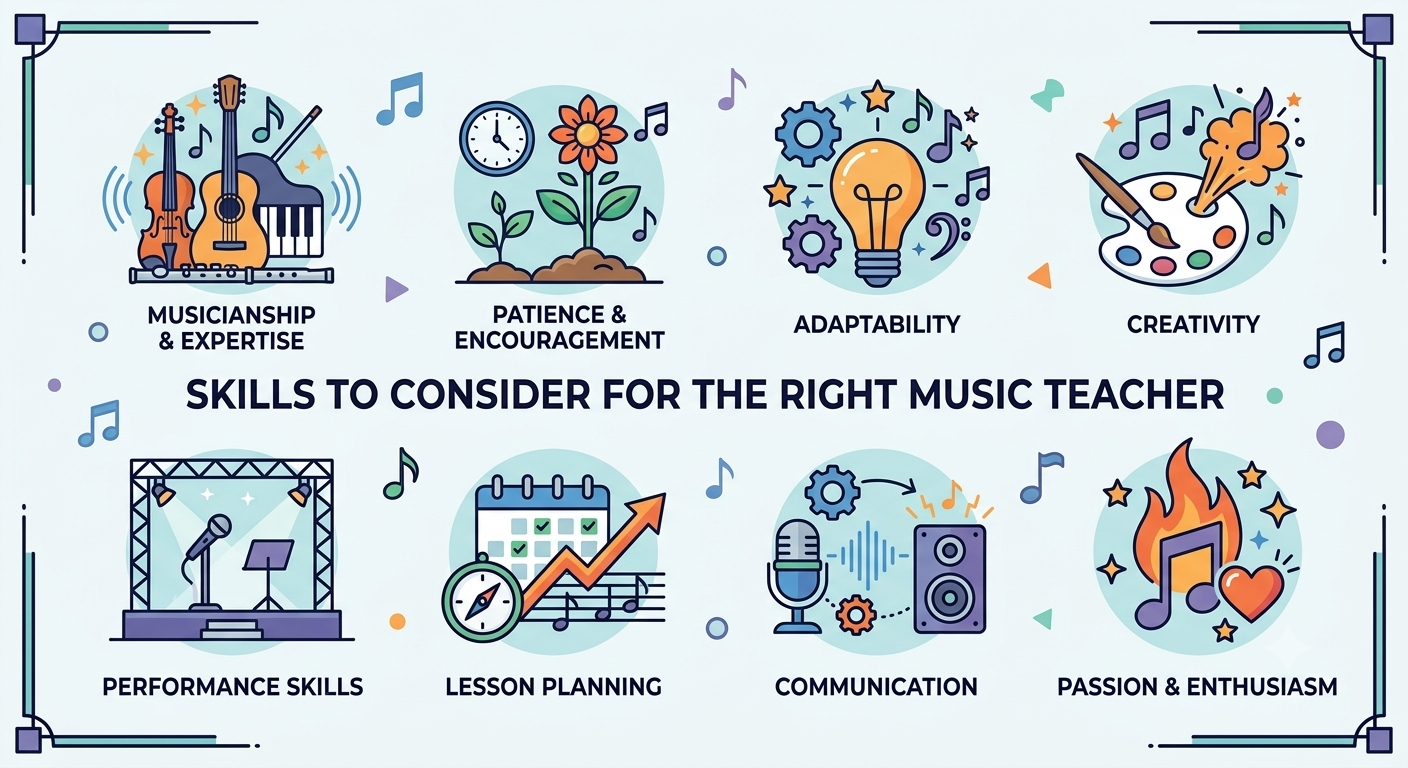
Here's what to actually evaluate.
Music Teacher Hard Skills
These are the technical, learnable, and measurable capabilities that a teacher either has or doesn't.
1. A Trained Ear
A good music teacher can identify pitch, tone, and rhythm accurately, and catch the moment a note slips out of tune before a student even notices. This isn't optional. Without a reliably trained ear, feedback to students becomes vague and unhelpful, and small technical errors compound undetected over weeks of practice.
2. Sight-Reading Proficiency
The ability to read and interpret sheet music quickly and accurately matters enormously, both for the teacher's own credibility and for what they can model to students. A teacher who sight-reads well can introduce new material efficiently and demonstrate pieces on the spot rather than relying entirely on memorised repertoire.
3. Multi-Genre Fluency
Some students want classical training. Others want to learn film music, jazz, or contemporary pop. A teacher who's only comfortable in one genre limits what a student can explore, especially as that student's taste develops over time. Look for a teacher who can move between styles competently, not just one who claims to.
4. Rhythm and Timing Instruction
Rhythm is the skeleton underneath every piece of music, and it's also one of the hardest things for self-taught students to develop without guidance. A skilled teacher breaks timing down methodically, using tools like metronome work and rhythmic subdivision exercises, rather than just saying "stay in time" and hoping it sinks in.
5. Playing by Ear and Improvisation
A teacher who can play a piece after hearing it without sheet music demonstrates a depth of musical understanding that goes beyond mechanical reproduction. This skill also feeds into the ability to improvise, which matters for students who are eventually developing their own musical voice rather than only ever replicating notation.
6. Comfort With Teaching Technology
Modern music education increasingly takes place through digital tools, whether that's a virtual classroom platform, practice tracking apps, or supplementary online resources. A teacher who integrates technology well can create more engaging, customised learning experiences. One who's uncomfortable with it will struggle to keep pace with how students now expect to learn, particularly in an online setting.
Music Teacher Soft Skills
Technical skill gets a student through the mechanics. Soft skills determine whether they actually stay motivated long enough to become good.
7. Genuine Patience
Progress in music is rarely linear. Some weeks, a student improves visibly. Other weeks, the same mistake repeats five times in a row, and nothing seems to land. A teacher's patience during those flat stretches often determines whether a student keeps going or quits out of frustration.
8. Clear Communication
Being able to explain a concept once isn't enough. A genuinely skilled teacher can explain the same idea three or four different ways, using different analogies and framing, until it clicks for that specific student. Clarity matters more than vocabulary. A teacher who overcomplicates simple ideas is a worse fit than one who keeps things plain and direct.
9. The Ability to Personalise Lessons
Every student learns differently and at different speeds. A good teacher adjusts pacing, repertoire, and teaching method based on what's actually working for that individual student rather than running everyone through an identical, rigid syllabus. This is especially important for younger students. Here, motivation and attention span vary enormously from child to child.
10. Strong Organisational Habits
This one gets overlooked, but it matters more than people expect. A teacher who tracks student progress, plans lessons with intention, and follows up on what was covered in the previous session runs a far more effective studio than one who improvises every lesson from scratch. Organisation isn't glamorous, but it's the quiet infrastructure that makes consistent progress possible.
Music Teacher Skills at a Glance
How to Improve Your Music Teacher Skills
If you're a teacher reading this rather than a parent evaluating one, the good news is that every skill on this list is developable.
- Record your own lessons occasionally. Watching yourself teach reveals communication habits and pacing issues you won't notice in the moment. Most teachers are surprised by what they see.
- Study pedagogy specifically, not just music. Being a skilled player doesn't automatically make someone a skilled teacher. Investing time in understanding how people actually learn, particularly children, pays off more than additional technical practice.
- Get comfortable with the tools your students use. If your lessons are online, understanding the platform, using visual aids effectively, and integrating supplementary digital resources will noticeably improve the learning experience you're providing.
- Ask for honest feedback from students and parents. Most teachers don't do this, and it's a missed opportunity. A simple, direct question about what's working and what isn't will surface blind spots faster than years of self-assessment.
- Stay a student yourself. Teachers who continue learning, whether that's a new instrument, a new genre, or an advanced technique on their primary instrument, tend to bring more energy and humility into how they teach others.
How Spardha Selects and Trains Its Instructors
At Spardha School of Music, every instructor goes through a structured certification process before they're matched with students. We evaluate both the hard skills, technical proficiency, sight-reading, genre versatility, and the soft skills, patience, communication, and the ability to personalise lessons for different learning styles.
This matters because music teacher skills aren't something we can assume taking a look at a resume. They're something we actively assess and continue developing through ongoing instructor training. Whether your child is learning guitar, piano, vocals, or any other instrument, you're working with someone who's been evaluated against exactly the criteria covered in this article.
Book a free trial class today and experience the difference a properly vetted instructor makes.
Conclusion
Choosing the right music teacher isn't a guessing game once you know what you need. The strongest instructors combine music teacher hard skills, sight-reading, ear training, genre fluency, and technical knowledge with the music teacher soft skills that keep students motivated and progressing: patience, clear communication, and genuine personalisation.
Evaluate both sides before you commit. The right teacher doesn't just teach an instrument. They shape a student's entire relationship with music.
Frequently Asked Questions
What are the most important music teacher skills to look for?
A trained ear, sight-reading proficiency, clear communication, and patience consistently rank as the most important. Technical skill without strong communication and patience often results in a frustrating learning experience, especially for younger students.
What's the difference between a music teacher's hard skills and soft skills?
Hard skills are technical and measurable, such as sight-reading, ear training, and genre versatility. Soft skills are interpersonal qualities like patience, communication, and the ability to personalise lessons. Both matter, and the strongest teachers combine them.
How can I tell if a music teacher has good soft skills before starting lessons?
A trial class is the most reliable way to assess this. Watch how the teacher responds when a student struggles, how clearly they explain a new concept, and whether they adjust their approach based on the student's reactions.
Why is the importance of music teacher skills often overlooked by parents?
Many parents default to evaluating teachers based on price, availability, or general reputation rather than specific teaching competencies. Credentials and experience matter, but they don't guarantee strong communication or patience, which are often what determine whether a child actually enjoys learning.
Can a music teacher improve their skills over time?
Yes, significantly. Skills like sight-reading and ear training improve with deliberate practice, while soft skills like communication and patience develop through experience, self-reflection, and direct feedback from students and parents.
Do online music teachers need different skills than in-person ones?
The core skills remain the same, but comfort with teaching technology becomes more important in an online setting. A teacher needs to communicate clearly through a screen, use digital tools effectively, and find ways to give the same quality of real-time feedback that in-person teaching allows.