

Table of Contents
The music industry represents one of the most innovative and ever-evolving sectors in our society today. Many aspiring superstars believe the music industry is all about performing in front of a crowd, but that’s far from reality. Behind the spotlight lies a wide range of career opportunities that go well beyond what audiences see on stage.
Today, there are different types of careers available in the music industry, most of which demand a combination of creative talent, technical knowledge, business savvy, and digital capabilities.
As streaming platforms continue to grow in popularity, independent artists are now able to reach vast audiences through social media. As a result, there is tremendous growth and development. Thus, if you’re looking for a career in the music industry, this blog is definitely for you. Here we will discuss the most exciting and growing careers in music industry, what skills are needed for each position, and why these positions are among the best in the music industry today.
Understanding Careers in the Music Industry
Besides just creating music, there are many more factors involved in the music industry: from production to distribution, management, licensing, and live performances. There are many different types of professionals who work behind the scenes of an artist’s or song’s success.
In fact, digital platforms have changed how songs are made, shared, and monetized; this means there are now traditional music industry jobs as well as technology-level jobs within the industry.
Why Choose a Career in the Music Industry?
Pursuing a music career is not only about passion but also about finding opportunities to grow within your career.
Advantages of working within the Music Industry:
- Creative opportunities
- Globalisation of the music industry
- Variety of flexible career paths including freelancing and opportunities to create multiple streams of income through royalties, gigs, and digital downloads
- Continually changing and innovating the music industry and continually learning from the changes and innovations.
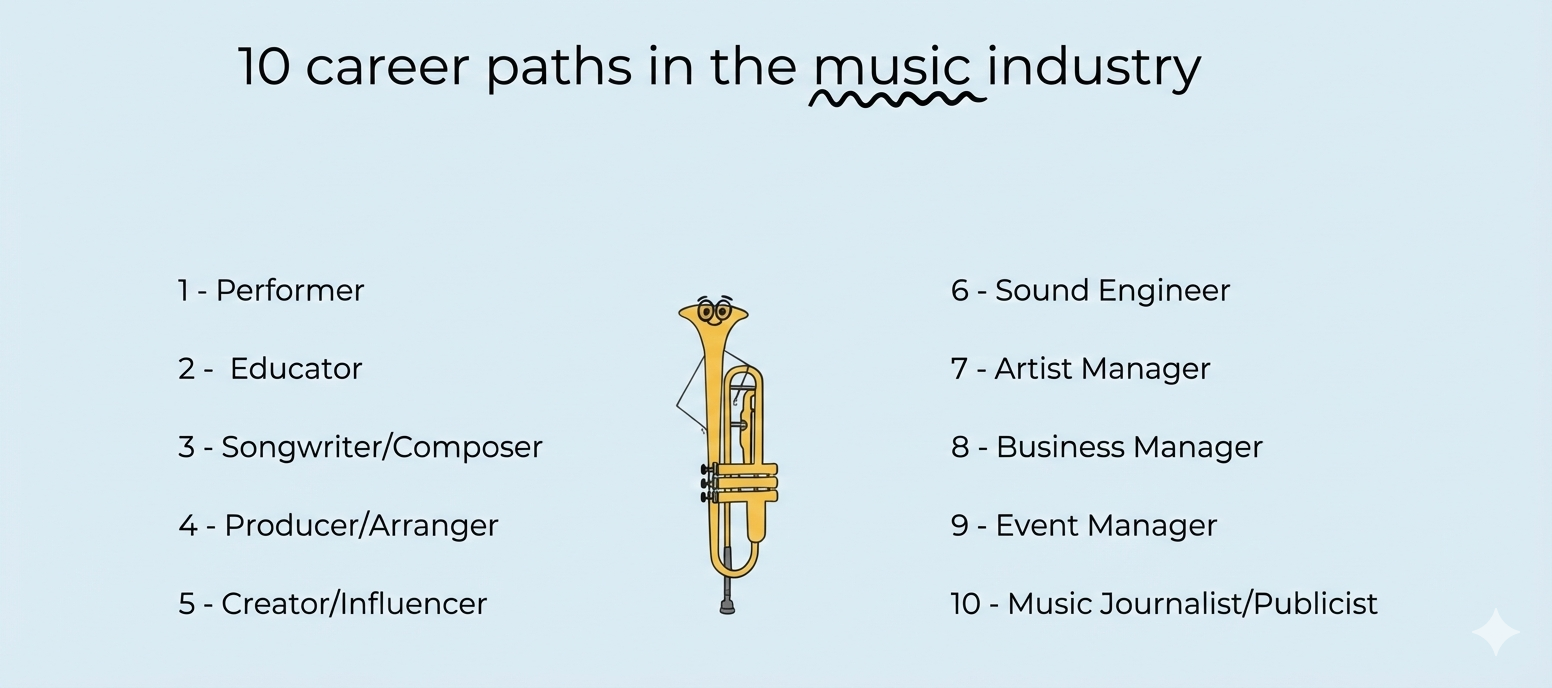
Different Career Paths in the Music Industry
The music industry has some excellent careers with long-term growth potential for those who appreciate music and want to explore their creativity.
1. Performer: Singer, Musician, Instrumentalist, or DJ
Salary in India:
- Average Salary: ₹3.0–₹3.4 lakhs per year
- Experienced performers and top-tier artists Salary: ₹13–₹16 lakhs+
This industry has a lot of performers, such as singers, musicians, band members, performers who perform live, and DJs.
What Performers Do:
- Perform live at concerts, festivals, and events
- Record songs and albums
- Collaborate with producers and composers
- Build a fan base through social media and live shows
Skills Required:
- Strong musical ability
- Consistent practice and discipline
- Stage presence and confidence
- Personal branding and marketing
Although competition is intense, performers who focus on originality and audience engagement can build a long-lasting music career.
2. Music Producer
Salary in India: ₹3 Lakhs and ₹10.5 Lakhs per year
Music producers work with artists to create a musical product such as an album or songs and create the sound of individual songs. They are also one of the most important parts of modern careers in the music industry.
Responsibilities:
- Make music by producing beats and arranging songs
- Work with musicians during recording sessions
- Work on a song by making sure it sounds nice and balanced when recorded
- Edit the recording using a computer program called Digital Audio Workstations (DAW)
With low-cost home studio setups, music production is now one of the easiest ways to enter the music industry.
3. Songwriter and Music Composer
Salary in India:
- For Freshers: Starting around ₹2–3 Lakhs annually
- For Experienced: ₹3.7 Lakhs to ₹15+ Lakhs per year
Songwriters and composers are the creators of music. They create all types of music including melody, harmony, and lyrics for musicians, film, television, and digital media (e.g., video games).
Career Opportunities:
- Compose music for artists and bands
- Compose music that plays while the film or TV show is being viewed, also known as "underscore"
- Create music for the purpose of creating commercials for tv shows, music videos, or video games
The job of composer is one of the most exciting, creative, and profitable careers in the music industry, and if done well, it will provide a good long-term living.
4. Sound Engineer / Audio Engineer
Salary In India: ₹4.0 Lakhs and ₹5.6 Lakhs per year
Sound engineers create high-quality, polished music recordings, whether it be in a recording studio and/or at live events.
Key Responsibilities:
- Recording & Editing Audio
- Mixing and Mastering Tracks
- Managing the Sound Equipment Used During Live Events
Technical sound engineering is an important aspect of the music industry and is often considered one of the most respected jobs available to someone who likes to work with technology.
5. Artist Manager
Salary in India: ₹7.5 L - ₹11.1 L/yr.
An artist manager is someone responsible for running the business side of the artistic side of an artist’s career.
Responsibilities of an Artist Manager Include:
- Long-Term Planning for Career Opportunities
- Contract/Deal Negotiation
- Schedule Management; Tour Plans; Endorsement Coordination; Branding & Promotional Coordination
Artist manager positions are a good fit for individuals interested in pursuing careers in music industry without the desire to be performers themselves.
6. Music Marketing and Digital Promotion Specialist
Salary in India: Around ₹7.4 Lakhs to ₹8.2 Lakhs per year
In the digital era, marketing has become an integral part of an artist's overall success.
Key Tasks:
- Promoting Music Online via Social Media
- Managing Campaigns for Streaming Platforms
- Creating Ads and Collaborating with Influencers
- Analyzing Audience Data
As a result, digital marketing is among the fastest-growing job categories within music for those with digital marketing talents.
7. Music Journalist, Blogger, or Content Creator
Salary In India: Average ₹4.4 Lakhs to ₹7.2 Lakhs per year
Professional opportunities in Music Journalism and Media Creation Contribute to the evolution of music culturally and musically.
Career Options:
- Writing Articles and Reviews in Publications
- Producing a Podcast
- Creating a YouTube Review/Interview
- Maintaining a Social Page on a social network dedicated to Music
If you enjoy creating content through storytelling and communicating in the areas of the music industry, this career may be a perfect fit for you.
8. Music Teacher or Instructor
Salary in India: approximately ₹3.2 - ₹4.1 Lakhs per year
Music teaching is one of the most solid, respected, and secure career choices.
Possible Work Locations:
- Schools of Music and Higher Education Institutes
- Private Music Academies
- Internet-based Teaching Platforms
- One-on-One Teacher Coaching.
The rapid growth of online learning has allowed for flexibility in music as a profession worldwide.
9. Music Publishing and Licensing Professional
Salary in India:
- Entry Level: Average of ₹15.1 Lakhs per year
- Mid-Level to Senior: ₹37.5 Lakhs per year
The field of professional music publishing is primarily responsible for the copyright and royalty administration on behalf of the artist.
Professional music publishers' responsibilities include:
- Maintaining the Copyright Rights associated with Music
- Licensing of music for Film, Television, advertisement, and Video Game uses
- Making payments to rights holders based on the revenue generated from Music use
This underrepresented position within the music industry can provide significant profits to the professional publishing of music.
10. Event Manager and Concert Promoter
Salary in India: ranging from ₹3 Lakhs to over ₹20 Lakhs per annum
Skilled event managers and event promoters are essential for producing live music events.
Key Duties:
- Planning Concerts/Festivals
- Managing Logistics/Budgets
- Coordinating Artists/Venues
- Promoting the Live Show
Music Event Manager is a fast-paced and fun job in the music industry that is great for those who enjoy teamwork and event management.
Emerging Careers in the Music Industry
Technology has opened new doors in the music world. Some emerging careers in music industry include:
- Music data analysts
- Streaming playlist curators
- AI music specialists
- Music NFT and Web3 consultants
- Virtual concert producers
These roles combine creativity with innovation and are expected to grow rapidly in the coming years.
How to Choose the Right Music Career
There are many factors to take into consideration when choosing which route to take in music. For example:
- Your natural talent(s)/interest(s)
- How much you’re willing to learn and adjust to change
- Your long-term goals for how much money you will generate from this profession.
In addition, most professionals hold multiple jobs within this industry (i.e. producers also teach or perform and do marketing). There is much versatility available in the music industry, so many people find it easy to change jobs within it.
Skills Needed for Success in the Music Industry
Regardless of the role, some skills are essential for all music industry jobs:
- Networking and communication
- Time management
- Continuous learning
- Adaptability to trends
- Passion and persistence
These skills help professionals build sustainable and rewarding music careers.
Final Thoughts
The music industry is far more diverse and opportunity-rich than most people imagine. Whether you dream of performing on stage, composing behind the scenes, teaching music, managing artists, or working with music technology, there is a career path that matches every talent and interest. Success in this field comes from continuous learning, skill development, and staying adaptable to industry trends.
If you’re serious about building a career in music, having the right guidance makes all the difference. Spardha School of Music offers structured courses for beginners and advanced learners, helping you learn music the right way, through expert mentorship, practical training, and performance-focused learning. Whether you want to become a performer, producer, composer, or teacher, Spardha provides the foundation you need to turn your passion for music into a professional career.
Frequently Asked Questions
1. Do I need to be a performer to work in the music industry?
No, the music industry offers many non-performing roles such as producer, sound engineer, manager, marketer, and teacher.
2. Can I make a stable career in music?
Yes, with the right skills, training, and consistency, music offers long-term and flexible career opportunities.
3. Is formal music education important?
While talent matters, formal training helps you build strong fundamentals, confidence, and professional credibility. It also helps to land the best jobs in the music industry.
4. How can Spardha School of Music help beginners?
Spardha School of Music provides step-by-step learning, expert guidance, and practical exposure, making it easier for beginners to start and grow in music.