Table of Contents
Quick Summary
Indie music (short for independent music) refers to music created outside the traditional major record label system. While the indie music meaning originally described independently produced music, today it also represents a creative style that values artistic freedom, authentic songwriting, and experimentation. Artists like Arctic Monkeys, Bon Iver, Phoebe Bridgers, Tame Impala, The 1975, Mitski, Clairo, and Prateek Kuhad have helped indie music gain worldwide popularity.
The word “indie” comes from independent.
Originally, indie music referred to artists who recorded and released music without signing with major record labels such as Universal Music Group, Sony Music Entertainment, or Warner Music Group.
These musicians often produced their own albums, managed their own promotions, and built loyal audiences through live performances and independent releases.
Today, however, the indie music meaning has evolved.
Many indie artists now work with larger labels but continue creating music that prioritizes artistic freedom over commercial trends.
Rather than following chart formulas, indie musicians focus on:
- Original songwriting
- Honest storytelling
- Experimental sounds
- Personal expression
- Unique production styles
This creative independence is what defines indie music today.
A Brief History of Indie Music
Indie music emerged during the late 1970s and 1980s as independent record labels began supporting artists who wanted creative freedom outside mainstream commercial music.
The movement gained momentum with independent rock bands in the UK and the US before expanding into multiple genres.
During the 2000s, digital platforms completely transformed indie music.
Artists no longer needed expensive record deals to reach listeners. Platforms like YouTube, Bandcamp, Spotify, Apple Music, and SoundCloud allowed independent musicians to build global audiences from their bedrooms.
Today, indie music is one of the fastest-growing categories in modern music.
What Makes Indie Music Different?
Many people confuse indie music with a musical genre.
It isn’t. It’s an approach to creating music.
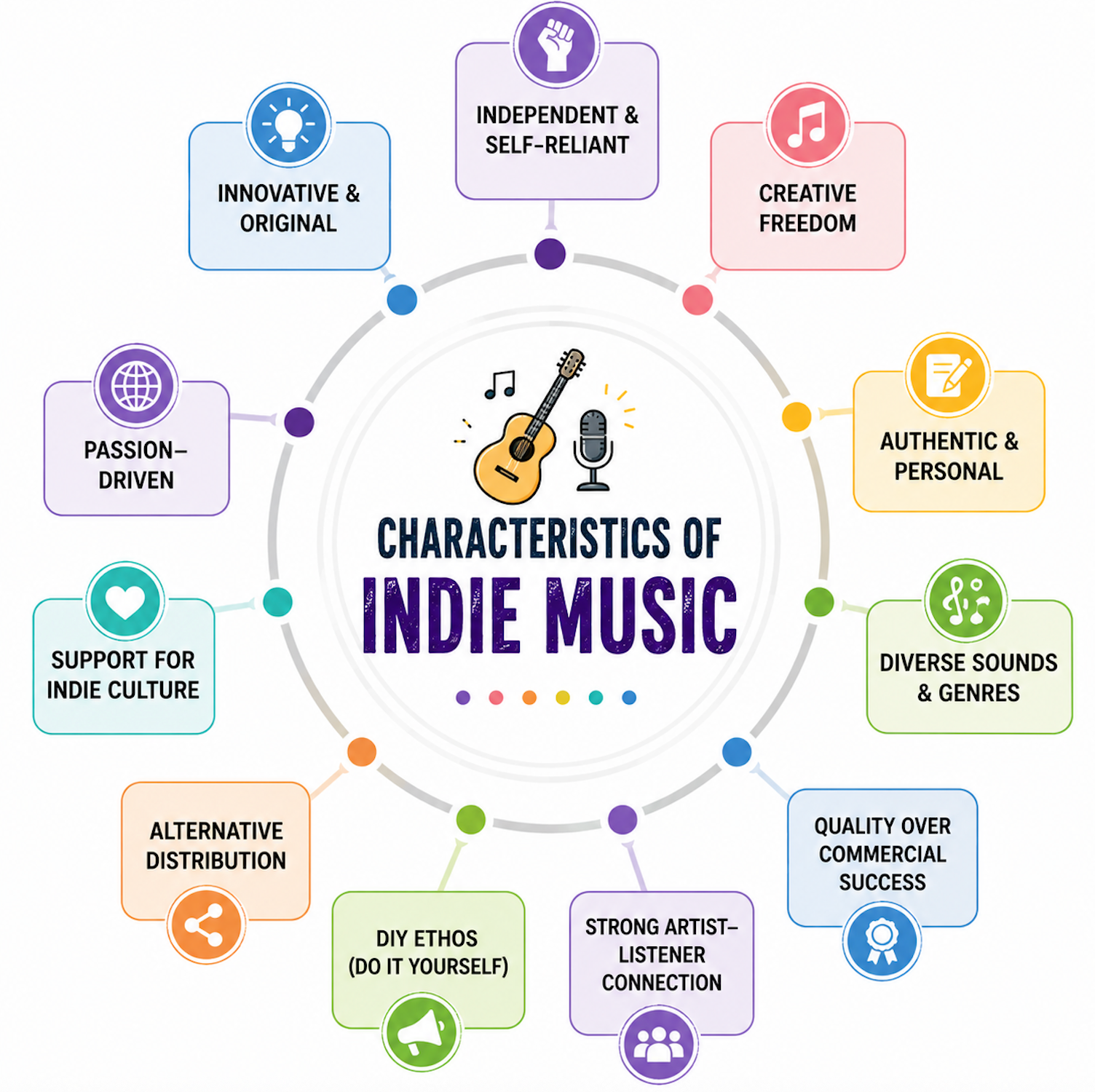
Here are the characteristics that define indie music.
Authentic Songwriting: Indie artists usually write their own lyrics and melodies, drawing inspiration from personal experiences instead of commercial trends.
Creative Freedom: There are fewer restrictions on musical style, allowing artists to experiment with unusual instruments, unconventional song structures, and different production techniques.
Minimalist Production: Unlike mainstream pop, many indie songs use natural vocals, acoustic instruments, and subtle production that preserves emotional authenticity.
Emotional Storytelling: Love, loneliness, nostalgia, self-discovery, relationships, and everyday life are common themes throughout indie music.
Popular Indie Music Genres
Indie music includes several distinct styles.
Top Indie Music Artists You Should Listen To
If you’re exploring indie music for the first time, these artists offer an excellent introduction.
Arctic Monkeys
Known for blending garage rock with indie rock, Arctic Monkeys became one of Britain’s most influential modern bands through songs like Do I Wanna Know? and 505.
Bon Iver
Bon Iver introduced a softer, emotionally rich indie folk style through songs like Skinny Love and Holocene, inspiring countless singer-songwriters.
Phoebe Bridgers
Her introspective lyrics and minimalist arrangements have made her one of today’s leading indie artists.
Tame Impala
Kevin Parker’s psychedelic indie sound combines rock, pop, and electronic music in albums like Currents.
The 1975
Known for mixing indie pop, synth-pop, and alternative rock while constantly reinventing their sound.
Mitski
Recognized for emotionally powerful songwriting and distinctive vocals.
Clairo
One of the defining voices of bedroom pop and modern indie music.
Prateek Kuhad
India’s most internationally recognized indie singer-songwriter, known for songs like Co2, Cold/Mess, Kasoor, and Tune Kaha.
Best Indie Songs Everyone Should Hear
Whether you’re new to indie music or expanding your playlist, these songs represent different styles within the indie world.
Indie Music in India
India’s indie music scene has grown rapidly over the last decade.
Streaming platforms and social media have enabled independent musicians to reach millions without relying on Bollywood.
Some notable Indian indie music artists include:
- Prateek Kuhad
- Anuv Jain
- When Chai Met Toast
- The Local Train
- Ritviz
- Peter Cat Recording Co.
- Easy Wanderlings
- Mali
- Parekh & Singh
- Taba Chake
Their music spans acoustic folk, indie pop, electronic, and alternative rock.
Why Is Indie Music So Popular?
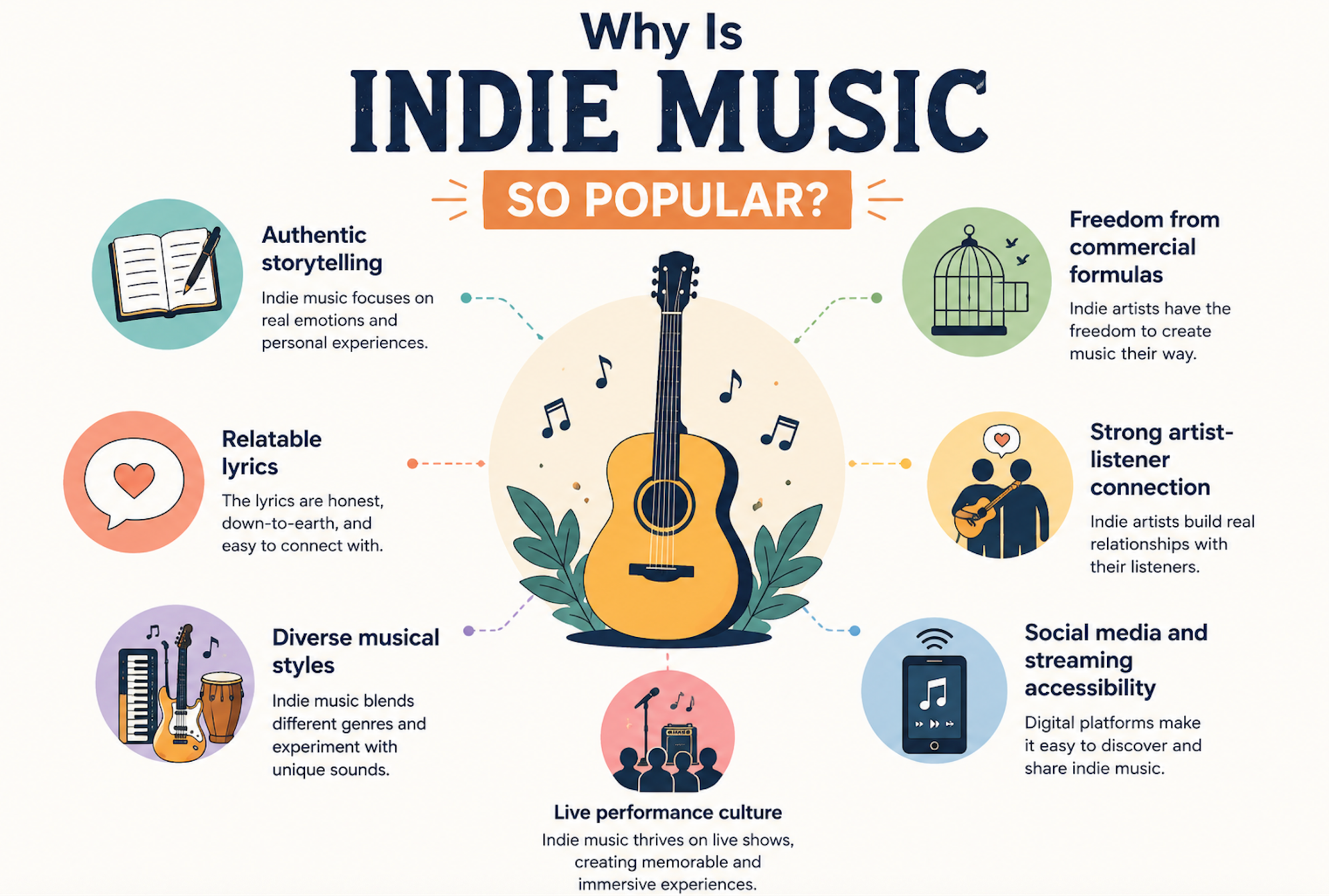
Several factors have contributed to indie music’s growing popularity.
- Authentic storytelling
- Relatable lyrics
- Diverse musical styles
- Freedom from commercial formulas
- Strong artist-listener connection
- Social media and streaming accessibility
- Live performance culture
Listeners often appreciate indie music because it feels more personal and emotionally honest than highly commercial productions.
Learn Singing at Spardha School of Music
If you enjoy artists like Prateek Kuhad, Bon Iver, Phoebe Bridgers, Clairo, or The 1975, learning the techniques behind indie singing can help you develop your own musical identity.
At Spardha School of Music, students receive live one-on-one online singing classes tailored to their goals and experience level. Along with contemporary and indie vocal styles, students build strong fundamentals through breathing techniques, pitch training, ear training, rhythm exercises, voice modulation, and performance practice.
Whether you’re learning to sing your favourite indie songs, preparing for performances, or building a professional singing career, Spardha’s personalised instruction helps you develop confidence while finding your unique voice.
Final Thoughts
The indie music meaning has evolved far beyond independent record labels. Today, indie music represents authenticity, creativity, and artistic freedom. From intimate acoustic ballads to experimental electronic soundscapes, indie artists continue pushing musical boundaries while building deep connections with listeners.
Whether you’re discovering indie music artists, creating a playlist of your favourite indie songs, exploring indie pop songs, or planning to learn indie vocals, this genre offers something for every music lover. Its emphasis on originality and honest storytelling is why indie music remains one of the most influential movements in contemporary music.
Frequently Asked Questions
What is indie music?
Indie music is music created independently of major record labels. Today, it also describes a style of music known for artistic freedom, original songwriting, and authentic storytelling.
What does indie music mean?
The term "indie" is short for "independent." Originally, it referred to artists releasing music independently, but it now represents a broader creative approach to music.
Who are the most popular indie music artists?
Popular indie music artists include Arctic Monkeys, Bon Iver, Phoebe Bridgers, Tame Impala, Clairo, Mitski, The 1975, Cigarettes After Sex, and India's Prateek Kuhad.
What are some famous indie songs?
Some of the best indie songs include Skinny Love, Do I Wanna Know?, Holocene, Apocalypse, Cold/Mess, Somebody Else, and The Less I Know the Better.
Is indie music a genre?
Not exactly. Indie originally referred to independent music production, but today it encompasses several genres, including indie rock, indie pop, indie folk, dream pop, and indie electronic music.
Can beginners learn indie singing?
Yes. Indie singing emphasizes emotional expression, storytelling, rhythm, and vocal authenticity, making it an accessible style for beginners alongside regular vocal training.