Table of Contents
Quick Summary
Balancing a full-time job with personal interests can be challenging, but hobbies don't always require hours of free time. Setting aside 20–30 minutes, planning activities around your work schedule and choosing something you genuinely enjoy can help you build a sustainable routine. From going to the gym and learning music to dancing, painting, reading and playing sports, there are several hobbies for adults that can make life outside work more enjoyable.
Between office deadlines, meetings, household responsibilities and personal commitments, finding time for yourself can feel difficult. You might want to join a gym, learn guitar, start painting or take up dancing, but by the time the workday ends, all you want to do is relax.
And before you know it, another week has passed without doing anything for yourself.
The good news is that you don't need to quit your job, wake up at 4 AM or completely reorganise your life to pursue a hobby. You simply need to make a little room for something you enjoy.
Here are some practical ways to do that.
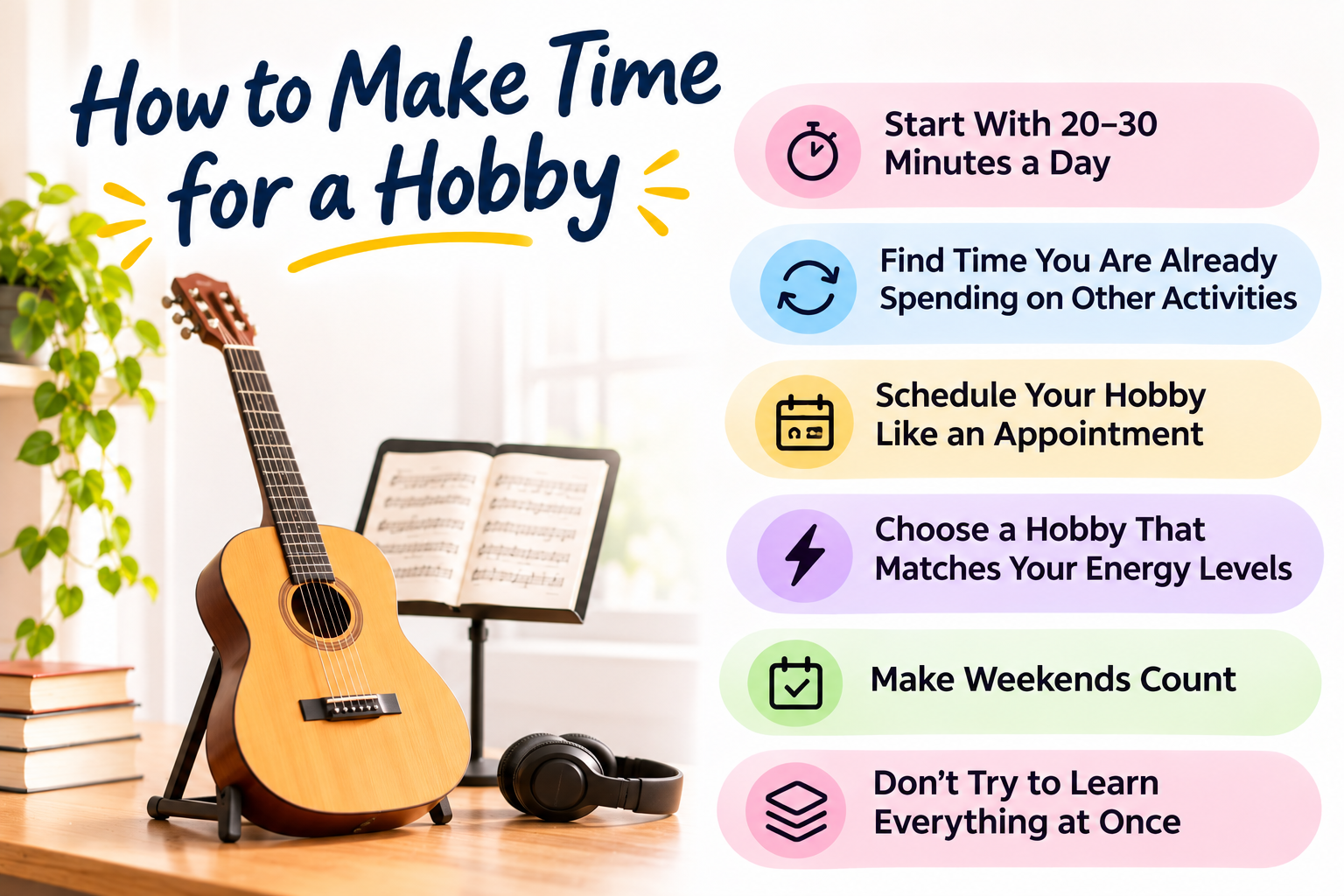
1. Start With 20–30 Minutes a Day
Don't wait for an entire free afternoon to start a hobby. Begin with a small time commitment.
For example:
- 20 minutes of guitar practice after work.
- 30 minutes at the gym before heading home.
- 15 minutes of reading before bedtime.
- 20 minutes of dancing in the evening.
- 30 minutes of painting on a weekday.
Small sessions are easier to fit into a busy schedule and can help you build consistency.
2. Find Time You Are Already Spending on Other Activities
Take a look at your everyday routine. How much time goes into scrolling social media, watching random videos or switching between apps?
You don't need to eliminate entertainment, but you can replace a small part of that time with something you have been wanting to learn.
Even reclaiming 20 minutes a day can create room for a new interest.
3. Schedule Your Hobby Like an Appointment
If you leave your hobby for whenever you find free time, it may keep getting postponed.
Instead, add it to your calendar.
For example:
- Monday, Wednesday and Friday: Gym.
- Tuesday and Thursday: Music practice.
- Saturday: Dance class or a creative activity.
- Sunday: Reading, cycling or another relaxed activity.
You don't have to follow a strict timetable every week. Having a planned slot simply makes it easier to prioritise your interests.
4. Choose a Hobby That Matches Your Energy Levels
Not every day feels the same. After a demanding workday, you may not have the energy for an intense workout or a complicated activity.
Choose something that matches how you feel.
- Feeling energetic? Go to the gym, swim or play a sport.
- Want to relax? Read, paint or listen to music.
- Want to learn something? Practise an instrument or a new language.
- Want to be creative? Try photography, cooking or dance.
The idea is to enjoy your hobby, not turn it into another responsibility.
5. Make Weekends Count
Weekends are a great opportunity to explore hobbies that need a little more time.
You could attend a music lesson, go cycling, try pottery, visit an art workshop or spend an hour learning a new dance routine.
Rather than filling your entire weekend with activities, reserve one or two sessions for yourself.
6. Don't Try to Learn Everything at Once
You might want to join a gym, learn online piano, start dancing, take photography lessons and read more books. But trying to do everything together can become overwhelming.
Start with one or two interests. Give yourself enough time to understand whether you enjoy them before adding something new.
Remember, hobbies should add something enjoyable to your life, not make your schedule more stressful.
What Are the Best Hobbies for Adults With a Full-Time Job?
The best hobby is not necessarily the most popular one. It is something that interests you, fits your lifestyle and gives you a reason to look forward to your free time.
Here are some interesting hobbies to consider, depending on what you enjoy.
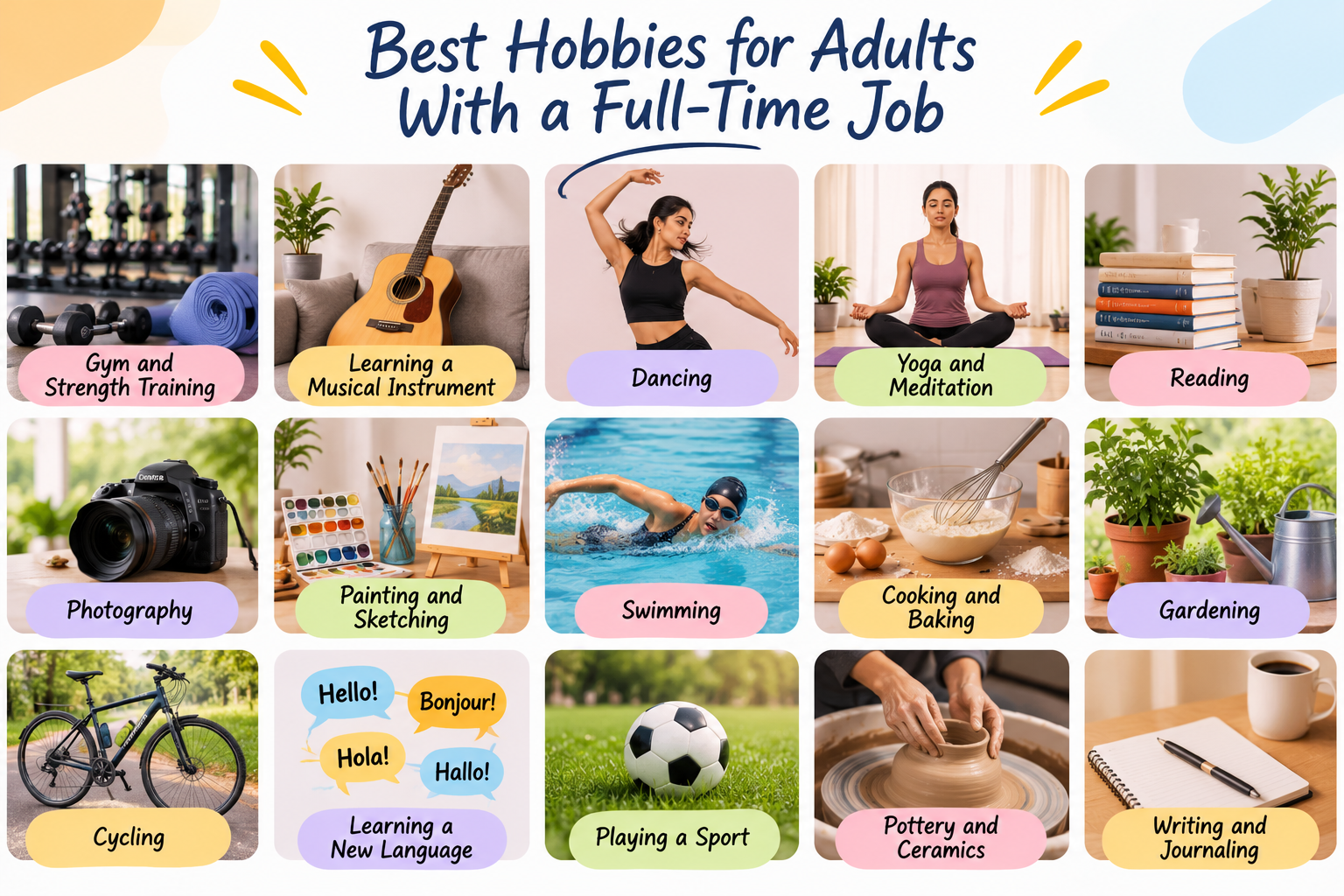
1. Gym and Strength Training
If you spend most of your day sitting at a desk, joining a gym can be a good way to include physical activity in your routine.
You can explore strength training, cardio, functional workouts or group fitness sessions.
Why try it?
- Helps build strength and physical endurance.
- Provides a structured fitness routine.
- Gives you a dedicated break from work.
- Offers measurable fitness goals to work towards.
Time commitment: 30–60 minutes, 3–5 days a week, depending on your routine and fitness level.
2. Learning a Musical Instrument
Have you ever wanted to play your favourite song on a guitar or piano? Learning an instrument can be a rewarding hobby, even if you have never studied music before.
You can explore instruments such as:
- Guitar
- Piano
- Keyboard
- Violin
- Ukulele
- Tabla
- Flute
You don't need to practise for hours every day. A focused 20-minute session can help you work on a melody, understand a musical concept or improve a particular technique.
Why try it?
- Encourages creativity and musical expression.
- Gives you a skill to develop over time.
- Helps you explore different genres of music.
- Offers a refreshing activity outside your professional routine.
Time commitment: 15–30 minutes per practice session.
3. Dancing
If you enjoy music and movement, dancing can be a fun hobby to explore.
There are several dance styles to choose from, including Bollywood, Bharatanatyam, Kathak, hip-hop and contemporary dance.
You can attend a class, practise choreography at home or simply put on your favourite playlist and dance.
Why try it?
- Encourages movement and physical activity.
- Helps develop coordination and body awareness.
- Offers a creative way to express yourself.
- Can be enjoyed individually or in a group.
Time commitment: 20–45 minutes per session.
4. Yoga and Meditation
If your workday feels hectic, yoga and meditation can be activities worth exploring.
Yoga combines physical postures, breathing and controlled movement, while meditation encourages focused attention and relaxation.
Why try it?
- Encourages flexibility and mobility.
- Helps you develop body awareness.
- Creates space for mindful movement.
- Can be adapted to different fitness levels.
Time commitment: 15–30 minutes a day.
5. Reading
Reading is one of the easiest hobbies to fit into a busy schedule. You can read during your commute, before bed or whenever you have a quiet moment.
Explore different genres such as fiction, biographies, self-development, mystery, travel writing or historical books.
Why try it?
- Introduces you to new ideas and perspectives.
- Encourages imagination.
- Can become a relaxing daily routine.
- Lets you explore subjects beyond your professional field.
Time commitment: 10–20 minutes a day.
6. Photography
You don't need an expensive camera to start photography. Your smartphone is enough to begin exploring composition, lighting, angles and storytelling.
You can photograph architecture, nature, food, street scenes or everyday moments.
Why try it?
- Encourages you to notice details around you.
- Develops creativity and visual storytelling.
- Gives you a reason to explore new places.
- Can be practised during everyday outings.
Time commitment: Flexible, depending on your interest.
7. Painting and Sketching
If you enjoy working with colours and shapes, painting and sketching can be interesting hobbies to explore.
Try watercolours, acrylic painting, pencil sketches, doodling or digital illustration.
You don't need to create perfect artwork. The experience of experimenting with colours and ideas can be enjoyable on its own.
Why try it?
- Encourages creative expression.
- Helps you explore different art techniques.
- Offers a screen-free activity.
- Allows you to create something at your own pace.
Time commitment: 20–45 minutes per session.
8. Swimming
Swimming is a full-body physical activity that can be both enjoyable and challenging. If you have access to a pool, you can take beginner lessons or build a regular swimming routine.
Why try it?
- Engages multiple muscle groups.
- Supports cardiovascular fitness.
- Offers a different form of exercise from gym workouts.
- Can be a refreshing way to spend time outside work.
Time commitment: 30–45 minutes per session.
9. Cooking and Baking
If you enjoy experimenting with food, cooking and baking can become rewarding hobbies.
Try learning a new cuisine, baking bread, preparing desserts or recreating dishes from your favourite restaurants.
Why try it?
- Encourages creativity and experimentation.
- Helps you learn practical kitchen skills.
- Gives you something enjoyable to share with friends and family.
- Can turn everyday meal preparation into a learning experience.
Time commitment: 30–60 minutes, depending on the recipe.
10. Gardening
Gardening is a good option if you enjoy spending time around plants and nature. You can start with a few indoor plants, grow herbs on your balcony or create a small home garden.
Why try it?
- Encourages regular interaction with nature.
- Teaches patience and consistency.
- Offers a hands-on activity away from screens.
- Lets you learn about plants and their care.
Time commitment: 10–20 minutes a day or longer weekend sessions.
11. Cycling
Cycling can be a great way to combine physical activity with outdoor exploration. You can cycle around your neighbourhood, explore new routes or join weekend cycling groups.
Why try it?
- Encourages cardiovascular activity.
- Lets you explore different surroundings.
- Can be enjoyed alone or with friends.
- Adds variety to your weekly fitness routine.
Time commitment: 30–60 minutes per session.
12. Learning a New Language
Always wanted to learn Spanish, French, Japanese or another language? You can begin with short daily lessons and gradually improve your vocabulary, pronunciation and conversational skills.
Why try it?
- Introduces you to another language and culture.
- Encourages regular learning.
- Can be practised through short lessons.
- Gives you a skill that may be useful while travelling.
Time commitment: 15–20 minutes a day.
13. Playing a Sport
Badminton, tennis, football, basketball and table tennis are some activities you can explore after work or during weekends.
You can play casually with friends or join a local sports group.
Why try it?
- Encourages physical activity.
- Offers opportunities to socialise.
- Develops movement and coordination skills.
- Makes exercise more interactive and enjoyable.
Time commitment: 45–60 minutes per session.
14. Pottery and Ceramics
Pottery is a hands-on creative activity where you work with clay to create bowls, mugs, sculptures and decorative objects.
You can attend weekend workshops or join a regular ceramics class.
Why try it?
- Encourages creativity through hands-on work.
- Introduces you to a new artistic skill.
- Offers a break from digital activities.
- Gives you something tangible to create.
Time commitment: 1–2 hours for a workshop.
15. Writing and Journaling
Writing can be an interesting hobby if you enjoy putting your thoughts into words.
You could maintain a personal journal, write short stories, explore poetry, start a blog or document your travel experiences.
Why try it?
- Encourages self-expression.
- Helps organise your thoughts.
- Allows you to explore storytelling.
- Can be practised in short sessions.
Time commitment: 10–20 minutes a day.
How to Choose the Right Hobby for Yourself?
With so many different kinds of hobbies available, choosing one can sometimes be more difficult than finding the time for it.
Instead of picking something just because it is trending, ask yourself a few simple questions:
You can also try an activity for a few weeks before committing to it. Your first choice doesn't have to become your lifelong hobby.
Make Time for Something You Enjoy With Spardha School of Music
Work is an important part of life, but it doesn't have to be the only thing that fills your calendar. Having an interest outside your professional routine gives you an opportunity to learn, explore and enjoy something simply because you love doing it.
If music or dance has been on your mind, Spardha School of Music offers live, one-on-one online classes for adults and children.
You can explore instruments such as piano, guitar, keyboard, violin, ukulele and tabla, or learn vocal styles including Hindustani, Carnatic, Western and Bollywood singing. Dance enthusiasts can also explore Bharatanatyam, Kathak and Bollywood dance.
Our structured lessons help students learn at a comfortable pace, making it easier to work towards a creative interest alongside other commitments.
Explore our online music and dance classes and make room for something you have always wanted to learn.
Conclusion
Having a full-time job doesn't mean you have to give up your personal interests. The key is to find activities that fit your schedule instead of waiting for the perfect time to pursue them.
Start by setting aside a little time each week, choose something you genuinely enjoy and allow yourself to learn without pressure.
Whether it's going to the gym, learning guitar, joining a dance class, playing badminton or spending a quiet evening with a book, the best hobby is the one you look forward to doing.
Make time for yourself, too. Your interests deserve a place in your routine.
Frequently Asked Questions
How can I make time for hobbies with a full-time job?
Start with 15–30 minutes a few times a week. Schedule your hobby in advance, reduce unnecessary screen time and use weekends for activities that need longer sessions.
What are the best hobbies for adults with busy schedules?
Reading, gym workouts, music practice, dancing, painting, journaling, gardening and learning a language are some hobbies that can fit around a full-time job.
What are some interesting hobbies to try after work?
You can try learning a musical instrument, joining a dance class, cooking, photography, swimming, painting or playing a sport. Choose an activity based on your interests and energy levels.
What are the different kinds of hobbies adults can explore?
Adults can explore fitness hobbies, creative activities, music, dance, outdoor activities, sports, cooking, reading and learning-based hobbies.
Is going to the gym considered a hobby?
Yes. For people who enjoy fitness and strength training, going to the gym can be a regular recreational interest as well as a way to stay physically active.
Can I learn music while working full-time?
Yes. You can learn an instrument or singing through structured lessons and short practice sessions. Online classes can make it easier to fit music learning around your work schedule.
Which hobbies can I do at home?
Music practice, singing, painting, sketching, reading, cooking, gardening, journaling and learning a language are some hobbies you can enjoy at home.
How many hobbies should an adult have?
There is no ideal number. Start with one or two activities that fit your routine. You can explore more interests as your schedule allows.
Are hobbies important for working professionals?
Hobbies give working professionals an opportunity to explore personal interests outside work. They can encourage creativity, physical activity, learning and social interaction.
How do I stay consistent with a new hobby?
Choose something you genuinely enjoy, set realistic goals and reserve specific time slots for practice. Start small and focus on enjoying the activity rather than expecting quick results.