Table of Contents
Quick Summary
India's classical dance heritage has been shaped by legendary artists who preserved, revived, and redefined traditions such as Bharatanatyam, Kathak, Odissi, Kuchipudi, and Mohiniyattam. From Rukmini Devi Arundale, who established Kalakshetra and modernised Bharatanatyam, to Pandit Birju Maharaj, the face of Kathak worldwide, and Kelucharan Mohapatra, who helped reconstruct Odissi, these famous classical dancers of India have left an enduring cultural legacy. This guide explores their contributions, achievements, dance styles, awards, and how they transformed Indian classical dance for future generations.
A classical dancer at the highest level isn't simply someone who has mastered a set of movements. They're someone who has spent years, sometimes decades, understanding a tradition so completely that their body becomes a vehicle for it rather than a vehicle for themselves.
India's classical dance traditions have produced a remarkable number of artists who achieved exactly that. By transforming declining traditions with contemporary relevance, pushing technical boundaries beyond the imagination of their teachers, and utilizing the stage for crucial cultural and political arguments, these individuals used art as a powerful vehicle for activism during a pivotal era for India.
This is a guide to the famous classical dancers of India who genuinely shaped these traditions, not just the ones who are most frequently named, but the ones who actually left the form different from how they found it.
What Makes a Classical Dancer Historically Significant
Before the list, it's worth establishing what "significant" actually means in this context, because popularity alone isn't a useful measure.
The dancers profiled here meet at least two of these criteria. Whether making lasting technical or aesthetic breakthroughs that redefined their tradition, producing a lineage of students who expanded its future impact, shifting global and domestic perceptions of their art form, or creating work during a critical era where their practice carried profound historical weight, these dancers transcended purely artistic expression to reshape the cultural landscape.
We deliberately exclude names that populate standard lists purely based on fame, ensuring only those who actually meet these rigorous criteria are included.
Famous Classical Dancers of India: The Defining Figures
1. Rukmini Devi Arundale - Bharatanatyam
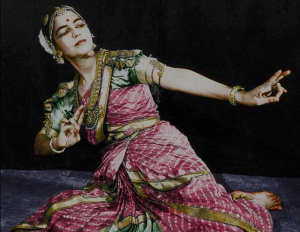
Born in 1904 in Madurai, Rukmini Devi Arundale is the single most important figure in the 20th-century history of Bharatanatyam. When she began studying the form in the 1930s under Pandanallur Meenakshisundaram Pillai, Bharatanatyam was practised primarily by devadasi communities within temple traditions and held in high regard by much of educated Indian society with suspicion or dismissal.
Rukmini Devi changed that. She learned the form, performed it publicly as a Brahmin woman at a time when that was socially transgressive, founded Kalakshetra in Chennai in 1936 as a dedicated institution for teaching, and developed a codified training methodology that was systematic enough to be taught to students without the guru-shishya oral transmission that had previously been the only pathway into the form.
Her contribution is contested in some scholarly circles because the codification that made Bharatanatyam widely teachable also standardised elements that previously had regional and individual variation. But her impact on the form's survival and global reach is beyond argument. Without Rukmini Devi Arundale, Bharatanatyam as we know it today would not exist in its current form.
She was also the first woman to be nominated to the Rajya Sabha in 1952 and spent her later years working for animal welfare legislation in India.
2. Birju Maharaj - Kathak
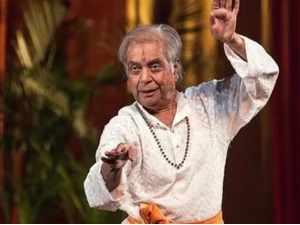
Pandit Birju Maharaj, born in 1938 in Lucknow into the Kalka-Bindadin gharana of Kathak, is the figure most people globally associate with the Kathak tradition. He passed away in January 2022, but his influence on the form extends across every classical dancer working in Kathak today, whether they trained under him directly or through someone who did.
What made him singular wasn't simply technical mastery, though his technical mastery was complete and documented across decades of recordings. It was the quality of his abhinaya - the expressive, narrative dimension of Kathak. His ability to inhabit a character through facial expression, hand gesture, and the precise weight of a phrase of footwork, without ever losing the rhythmic architecture underneath, represented a synthesis of the technical and the expressive that most dancers achieve only one of.
He was also a teacher of extraordinary dedication. His students include many of the finest working Kathak dancers today, and his teaching method, which emphasised understanding the ‘why’ of each movement alongside the ‘how’, has become a model for serious Kathak pedagogy.
He notably choreographed the Kathak sequences in Sanjay Leela Bhansali's films like Bajirao Mastani and Devdas, as well as Satyajit Ray’s Shatranj Ke Khiladi, which brought his aesthetic to a mass audience that might otherwise never have encountered Kathak at this level.
3. Balasaraswati - Bharatanatyam
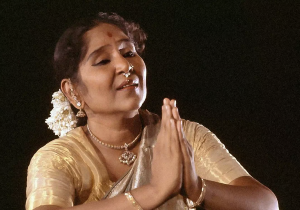
Tanjore Balasaraswati, known as Bala, represents a different lineage within Bharatanatyam from Rukmini Devi Arundale, and the contrast between them is instructive about the breadth of the tradition.
Where Rukmini Devi formalised and institutionalised, Bala embodied continuity with the devadasi tradition in its fullest sense. She came from a family of hereditary performers and musicians, learned from within that tradition, and performed with an improvisatory spontaneity that documented choreography could not fully contain.
Contemporaries described her abhinaya as unlike anything else they had witnessed, with an expressive depth and apparent effortlessness that scholars and dancers have been attempting to analyse ever since. She was the first Indian classical dancer to perform in the United States, appearing at the American Dance Festival in 1962, and her influence on how Western scholars and audiences understood Indian classical dance was enormous and lasting.
She also made an important intellectual contribution to debates about the nature and purpose of Indian classical dance, arguing forcefully against what she saw as the decontextualisation of the art from its devotional roots in the process of making it respectable for middle-class audiences.
4. Mrinalini Sarabhai - Bharatanatyam and Kuchipudi
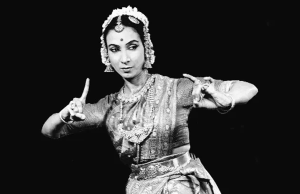
Mrinalini Sarabhai, born in 1918 in Kerala and trained under Meenakshisundaram Pillai and Kandappa Pillai, founded Darpana Academy of Performing Arts in Ahmedabad in 1949, which became one of the most significant dance training institutions in India.
She trained in both Bharatanatyam and Kuchipudi and worked throughout her career to use dance as a medium for social commentary, creating pieces that addressed contemporary Indian social issues through classical forms. That intersection of traditional form and contemporary relevance was unusual for its period and remains a significant part of her legacy.
Her daughter Mallika Sarabhai continued this work, becoming a prominent famous classical dancer in her own right and extending the Darpana tradition into the 21st century.
5. Yamini Krishnamurthy - Bharatanatyam and Kuchipudi
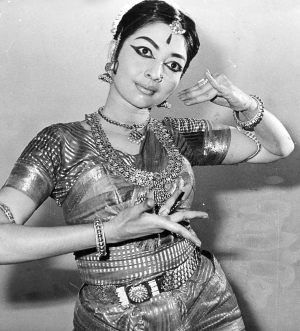
Born in 1940 in Andhra Pradesh, Yamini Krishnamurthy trained under the Vazhuvur style of Bharatanatyam and later studied Kuchipudi under Vedantam Lakshminarayana Shastri. She was awarded the Padma Bhushan in 1968 and the Padma Vibhushan in 2016, among numerous other recognitions.
What distinguished her performance style was a combination of technical precision and physical vitality that made her performances immediately arresting as visual events. Her footwork was exceptionally sharp, her abhinaya was emotionally direct, and the combination gave her a stage presence that critics and audiences across India and abroad consistently identified as distinctive even within a field of exceptional practitioners.
She worked primarily as a solo performer and is generally considered among the best classical dancers in India from the second half of the 20th century.
6. Sonal Mansingh - Bharatanatyam and Odissi
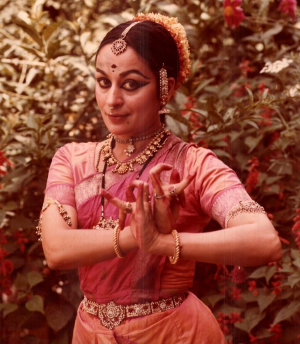
Born in 1944 in Mumbai, Sonal Mansingh is one of the few classical dancers to have trained seriously in multiple traditions, studying Bharatanatyam under Komal Kothari and Odissi under Kelucharan Mohapatra. She founded the Centre for Indian Classical Dances in New Delhi in 1977 and has worked throughout her career as both a performer and an advocate for the institutional support of classical arts.
Her contribution to Odissi in particular is significant, because she came to the form during the period of its reconstruction and helped shape how it was codified and presented to national and international audiences.
She was nominated to the Rajya Sabha in 2018 and has been a consistent voice in public cultural policy discussions about the funding and institutional support of Indian classical arts.
7. Kelucharan Mohapatra - Odissi
No list of famous classical dancers in India is complete without Kelucharan Mohapatra, the figure most directly responsible for the reconstruction and codification of Odissi as a classical form.
Born in 1926 in Raghurajpur, Odisha, Mohapatra was a painter, a sculptor, and a performance artist trained in Gotipua, a traditional Odishan male performance tradition. When a group of scholars and artists began the work of reconstructing Odissi in the 1950s from temple sculptures, ancient texts, and the surviving Gotipua tradition, Mohapatra was central to that process.
The Odissi that is taught today, the positions, the grammar of movement, the structure of a performance, reflects Mohapatra's input more than that of any other single practitioner. He also trained a generation of dancers, including Sonal Mansingh and Sanjukta Panigrahi, who took the form to national and international audiences.
8. Sanjukta Panigrahi - Odissi
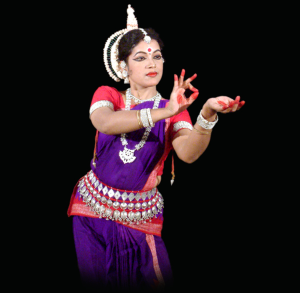
A student of Kelucharan Mohapatra, Sanjukta Panigrahi became one of the most internationally recognised Odissi dancers of the 20th century through her collaborations with German theatre director Eugenio Barba and his Odin Teatret company. Those collaborations, documented extensively in performance studies literature, brought Odissi into conversation with European contemporary theatre, influencing how both traditions subsequently developed.
She died in 1997 at the age of 49, but her work had an impact on the international reach during a relatively short performance career and scholarly study of Odissi that continues to shape how the form is understood outside India.
9. Protima Gauri Bedi - Odissi
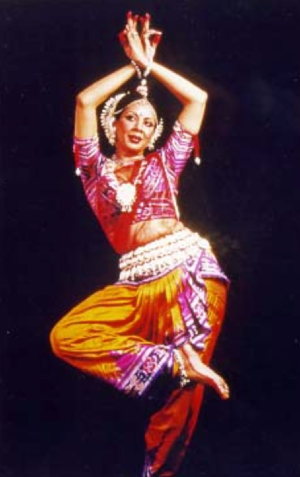
Born in 1948, Protima Bedi came to Odissi as an adult learner rather than through childhood training, studying under Kelucharan Mohapatra and becoming a performer of considerable standing despite beginning serious training later than most classical dancers do.
She founded Nrityagram, a dance village near Bangalore in 1990, designed as a residential community dedicated entirely to classical dance training and performance. Nrityagram continues to operate today and has produced a generation of exceptional Odissi dancers who have performed internationally.
Her approach to building an institution around complete immersion in the tradition rather than conventional scheduled classes represented a different model of classical dance education that has influenced how serious training is thought about in India and abroad.
10. Mrinalini Sarabhai's Student: Mallika Sarabhai - Bharatanatyam and Kuchipudi
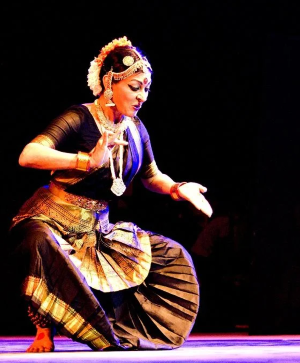
Mallika Sarabhai, born in 1954, trained under her mother, Mrinalini Sarabhai and continued the Darpana tradition of using classical dance as a medium for contemporary social commentary. She has used dance to address issues including violence against women, communal conflict, and political corruption, working within classical forms to carry arguments that their traditional context never anticipated.
She also appeared in Peter Brook's landmark theatrical adaptation of the Mahabharata in 1985, performing the role of Draupadi, which brought her work to international theatre audiences who had no prior exposure to Indian classical dance.
Quick Summary
What These Dancers Teach Us About the Tradition
The famous classical dancers of India on this list share something worth naming: none of them treated their tradition as a fixed object to be preserved unchanged. Every one of them engaged with the form they worked in as something living, something that needed to be understood deeply enough to be extended, defended, or applied to new contexts.
That engagement is the model that any serious student of Indian classical dance needs to understand. Learning the form is necessary but not sufficient.
Understanding the history, the debates, and the thinking that shaped the form is what separates a technically accomplished performer from an artist who contributes to the tradition they work in.
Learn Classical Dance at Spardha School of Music
Understanding these figures gives any student of Indian classical dance a richer context for what they're learning and why it matters. The movements, the positions, the repertoire, all of it comes from specific people who made specific decisions about what Indian classical dance should look like and what it should do.
At Spardha School of Music, our dance instructors bring exactly that kind of contextual knowledge to their teaching. Our Bollywood dance curriculum is built on classical foundations, and our certified instructors teach with an understanding of the traditions these famous classical dancers shaped.
Whether you're a parent looking for structured Indian dance education for your child, an adult learner wanting to develop a genuine connection to these traditions, or an NRI family wanting your children to understand and practise the art forms that are part of their cultural heritage — our live, 1-on-1 online classes give you instruction that goes beyond steps and sequences.
Book a free trial class today at Spardha School of Music and start learning with real cultural depth behind every movement.
Conclusion
The best classical dancer in India isn't a title that can be assigned to a single person because the tradition has produced multiple figures of extraordinary ability and cultural importance, each of whom contributed something specific and irreplaceable. Rukmini Devi Arundale rebuilt Bharatanatyam's institutional foundation. Birju Maharaj showed what Kathak's synthesis of technique and expression could become. Balasaraswati preserved a lineage that formal codification couldn't fully contain. Kelucharan Mohapatra reconstructed Odissi from fragments.
The famous classical dancers of India on this list aren't simply great performers. They're the people who made sure the traditions they loved survived long enough to be inherited.
Frequently Asked Questions
Who is considered the best classical dancer in India?
There is no single answer, and the question changes depending on which tradition you're asking about. Birju Maharaj holds the broadest consensus as the defining figure in Kathak. Rukmini Devi Arundale is most cited in relation to Bharatanatyam's modern history. Balasaraswati is considered by many scholars to represent the deepest expressive tradition within Bharatanatyam, and Kelucharan Mohapatra is the central figure in Odissi's reconstruction.
What makes a classical dancer in India "classical" as opposed to folk or contemporary?
Indian classical dancers work within one of the eight forms officially recognised by the Sangeet Natak Akademi — Bharatanatyam, Kathak, Odissi, Kuchipudi, Manipuri, Mohiniyattam, Kathakali, and Sattriya. These forms are codified traditions with documented technical vocabularies and theoretical frameworks, most tracing their lineage to the Natya Shastra. Folk and contemporary dancers work outside these codified systems.
Which classical dancer had the most international influence?
Balasaraswati's early performances in the United States in the 1960s and Sanjukta Panigrahi's collaborations with European theatre in the 1980s and 1990s both had significant international impact. Birju Maharaj's choreography for Bollywood films brought Kathak to global Hindi film audiences. All three shaped how Indian classical dance is understood outside India.
Are there male classical dancers in India of historical significance?
Yes. Birju Maharaj is the most prominent male classical dancer in the 20th-century tradition. Kelucharan Mohapatra, while primarily a teacher and choreographer in his later career, was a significant performer. Kathakali has always been predominantly performed by men, and its great performers — including Kalamandalam Gopi — deserve recognition alongside the predominantly female figures who dominate most lists.
Can adults learn Indian classical dance seriously?
Yes, though it requires commitment proportional to the level of seriousness you want to achieve. Protima Bedi, profiled above, began serious Odissi training as an adult and reached performance standards. The earlier you start, the more deeply the physical vocabulary becomes integrated — but adult learners with dedicated practice and good instruction can develop genuine competence.
Which Indian classical dance form is best for beginners?
Bharatanatyam is the most widely taught and most systematically codified, which makes it the most accessible entry point for beginners. Kathak is also commonly recommended for beginners who are drawn to storytelling and rhythm. The right choice depends on which tradition connects with you aesthetically and which has quality instruction available to you.