
Table of Contents
The best singers in the world don't have one thing in common. That's what makes the conversation interesting.
While some possessed an extraordinary technical range, others achieved profound impact through modest versatility paired with devastating emotional precision; yet all of them either shaped a genre so completely that it still echoes their signature sound or crossed linguistic and cultural divides with a voice that required no translation. What they share isn't a single quality, it's the rare combination of technical mastery and emotional authenticity that makes a voice unforgettable across decades.
This list covers singers from Western pop and soul, Indian classical and film traditions, opera, and jazz.
Best Singers of the World: The Definitive Guide
1. Aretha Franklin
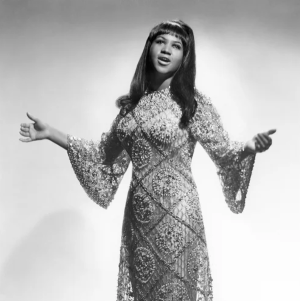
Genre: Soul, Gospel, R&B
Country: United States
Known for: “Queen of Soul”, one of the greatest vocalists of all time
Must-listen songs: Respect, Think, Natural Woman, Chain of Fools
Awards: 18 Grammy Awards, Presidential Medal of Freedom
Her technical range was substantial, but what separated her from other technically accomplished singers was her phrasing. She bent melodies, delayed resolutions, and placed syllables in rhythmically unexpected positions in ways that felt inevitable rather than calculated.
Franklin is also the reason that the word "soul" as a musical category has meaning. The genre exists in its current form because of her.
2. Lata Mangeshkar
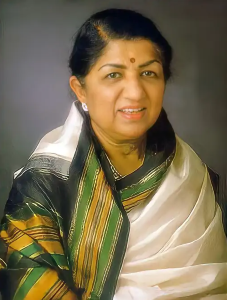
Genre: Hindi Film Music, Hindustani Classical, Bhajans, Ghazals
Country: India
Known As: The Nightingale of India
Best Songs: Lag Ja Gale, Aap Ki Nazron Ne Samjha, Ae Mere Watan Ke Logon, Tere Bina Zindagi Se, Aayega Aanewala
Awards: Bharat Ratna, Padma Bhushan, Padma Vibhushan, Dadasaheb Phalke Award, National Film Awards
The top singers of the world on any global list must include Lata Mangeshkar, and the reason isn't simply her extraordinary output across seven decades or thirty-six languages. It's the quality of her interpretation that is at its peak.
Her recordings with composers like Madan Mohan, particularly Lag Ja Gale and Aap Ki Nazron Ne Samjha, demonstrate a precision of emotional calibration that is studied by classical vocal students today. She didn't overdo but trusted melody and space in a way that most singers with her technical capability don't, because restraint is harder than display.
The evergreen singer is the defining voice of Indian popular music in the 20th century.
3. Frank Sinatra
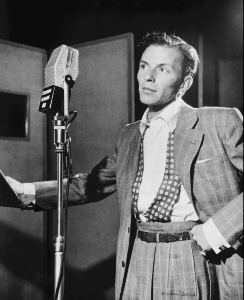
Genre: Jazz, Traditional Pop, Swing
Country: United States
Known As: Ol’ Blue Eyes, The Chairman of the Board
Best Songs: My Way, Fly Me to the Moon, New York, New York, Strangers in the Night, I’ve Got You Under My Skin
Awards: 11 Grammy Awards, Grammy Lifetime Achievement Award, Presidential Medal of Freedom
Frank Sinatra's voice wasn't the most technically powerful on any list. What it was is the most intelligently deployed voice in the history of American popular music.
His approach to a lyric was narrative rather than musical. He sang a song the way a great actor delivers a monologue, with an understanding of the emotional logic underneath the words that shaped every breath, every held note, and every phrase ending. In the Wee Small Hours (1955) remains the finest album ever recorded in the American popular standards tradition, and it sounds like it was made last week.
His influence on how male singers think about phrasing and emotional delivery extends far beyond the artists who are obviously in his debt.
4. Whitney Houston
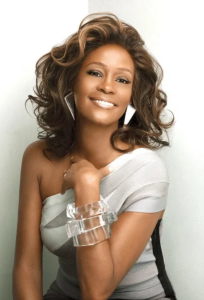
Genre: Pop, R&B, Soul, Gospel
Country: United States
Known As: The Voice
Best Songs: I Will Always Love You, I Have Nothing, Greatest Love of All, How Will I Know, Saving All My Love for You
Awards: 6 Grammy Awards, 22 American Music Awards, Emmy Award, Guinness World Record for the most awarded female artist (at the time)
The technical ceiling that Whitney Houston reached on recordings like I Will Always Love You and I Have Nothing is simply higher than almost any other pop singer has approached, with her range, sustain, and dynamic control within a single phrase. These are the measurable qualities, and hers were exceptional.
But the technical argument misses what actually made her significant. Her phrasing on slower ballads showed an understanding of when to withhold power that her imitators never grasped. The restraint in the opening of I Will Always Love You, the unaccompanied a cappella section that precedes the full arrangement, is more impressive than the famous finale precisely because it's less obviously impressive.
She is the top singer of the world by most purely technical assessments of the pop vocal tradition.
5. Pavarotti
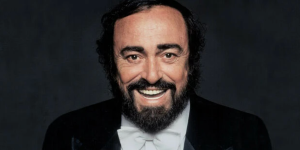
Genre: Opera (Tenor), Classical
Country: Italy
Known As: The King of the High C, One of The Three Tenors
Best Performances: Nessun Dorma, La Donna è Mobile, O Sole Mio, Ave Maria
Awards: Grammy Legend Award, Kennedy Center Honors, Polar Music Prize
Luciano Pavarotti's tenor voice is the sound most people imagine when they try to picture what a great classical singing voice sounds like, and that cultural penetration is itself a measure of his significance.
His top notes, the high Cs that became his signature, were produced with a freedom and ease that made them sound like the natural conclusion of a phrase rather than an athletic feat. That appearance of effortlessness is one of the hardest qualities to develop in operatic singing and one of the most valuable in performance.
The one with Three Tenors concerts in the 1990s introduced opera to audiences who had never engaged with the form, which expanded the classical singing audience globally in a way that institutional opera companies hadn't managed to do on their own.
6. Nina Simone
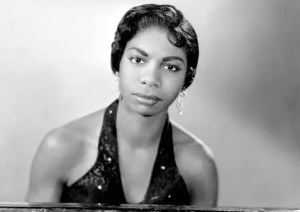
Genre: Jazz, Blues, Soul, Gospel
Country: United States
Known As: The High Priestess of Soul
Best Songs: Feeling Good, I Put a Spell on You, Mississippi Goddam, Don’t Let Me Be Misunderstood, Sinnerman
Awards: Grammy Hall of Fame Honours, Rock & Roll Hall of Fame (2018)
Nina Simone's voice didn't fit the conventional categories that the music industry of her era was comfortable with, and that was partly the point. It was too low for pop, too raw for classical, too politically charged for easy commercial consumption. None of that diminished her. It defined her.
Her definitive recordings of Feeling Good, I Put a Spell on You, and Mississippi Goddam serve as masterclasses in vocal execution, demonstrating how timing, dynamics, and raw presence can transform a song into a confrontation with the listener rather than a passive performance. Furthermore, as a classically trained pianist, a profound grasp of harmonic structure allowed her to navigate and manipulate melody with a sophisticated complexity that untrained vocalists simply cannot replicate.
She is the most intellectually rigorous of all the singers on this list, and the most openly political, which are related qualities.
7. Michael Jackson
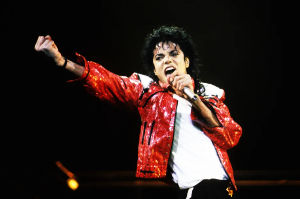
Genre: Pop, R&B, Soul, Funk
Country: United States
Known As: The King of Pop
Best Songs: Billie Jean, Thriller, Beat It, Man in the Mirror, Human Nature
Awards: 13 Grammy Awards, Grammy Legend Award, Rock & Roll Hall of Fame (twice)
The argument for Michael Jackson as one of the best singers on the planet isn't primarily about vocal range, though his falsetto was exceptional. It's about the integration of voice with rhythm in a way no other pop singer has achieved at the same level.
His vocal performances on Billie Jean, Man in the Mirror, and Human Nature demonstrate different capabilities: the rhythmic precision of the first, the emotional directness of the second, the melodic tenderness of the third. Each shows a different dimension of what his voice was capable of, and together they establish a range of expression that most singers with more technically powerful voices don't approach.
8. Nusrat Fateh Ali Khan
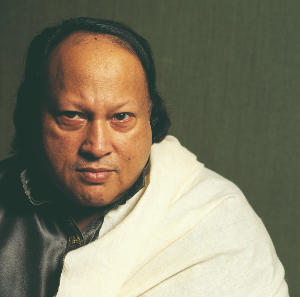
Genre: Qawwali, Sufi, Ghazal
Country: Pakistan
Known As: The King of Qawwali
Best Songs: Allah Hoo, Afreen Afreen, Ye Jo Halka Halka Suroor Hai, Tumhe Dillagi, Sanson Ki Mala Pe
Awards: UNESCO Music Prize nominee, Pride of Performance (Pakistan), recipient of multiple international honours
For anyone who hasn't encountered Nusrat Fateh Ali Khan, hearing him live for the first time is genuinely soulful. The voice is enormous in range, in stamina, and in the quality of ecstatic intensity; it can sustain across performances that sometimes last several hours.
He was the foremost practitioner of Qawwali, the devotional Sufi musical tradition of South Asia, and he brought it to international audiences through collaborations with Western musicians, including Peter Gabriel, who featured him on the Last Temptation of Christ soundtrack in 1988.
His improvisations within a single performance demonstrate a relationship to melody and rhythm that doesn't have a Western equivalent. Khan is among the most technically astonishing singers ever recorded, and among the least familiar to audiences outside South Asian music communities.
9. Celine Dion - Pop and Ballad
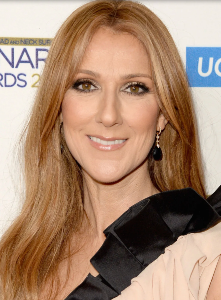
Genre: Pop, Adult Contemporary, Ballad
Country: Canada
Known As: Queen of Power Ballads
Best Songs: My Heart Will Go On, The Power of Love, Because You Loved Me, It’s All Coming Back to Me Now, I’m Alive
Awards: 5 Grammy Awards, Academy Award-winning soundtrack performer, over 250 million records sold
Celine Dion's voice sits at the intersection of classical vocal technique and contemporary pop production, and the combination produced some of the most commercially successful and technically impressive recordings of the 1990s.
Her work on My Heart Will Go On, The Power of Love, and the French-language recordings that defined her early Canadian career demonstrate consistent pitch control and emotional directness. She is also one of the more durable live performers on this list, sustaining a voice across decades of intensive touring that most pop singers don't manage.
The Top 10 Singers in the World of All Time: Consolidated View
What Makes a Singer Legendary
Being popular isn't enough. Plenty of massively popular singers are forgotten within a decade of their peak. A legendary singer leaves the tradition they worked in structurally different from how they found it.
The top singers of the world on this list meet at least one of these criteria. They introduced something technically or expressively new that other singers subsequently adopted. They produced a body of recorded work that rewards careful listening fifty years later. Or they sang during a period when their voice carried cultural and historical weight beyond the purely musical.
What Every Singer on This List Has in Common
The top singers of the world across every tradition on this list shared one practice: they listened at least as much as they sang. Every one of them studied their tradition deeply before extending it and understood that a voice, however gifted naturally, becomes legendary through deliberate development rather than talent alone.
- Aretha Franklin’s soul recordings were forged in gospel
- Lata Mangeshkar’s definitive film work was built on a rigorous classical foundation
- Nusrat Fateh Ali Khan’s public mastery was preceded by years of strict hereditary Qawwali training.
In other words, raw vocal talent is merely the starting point; it is the discipline of the craft that gives it enduring weight.
Develop Your Voice at Spardha School of Music
Every legendary singer on this list had one thing before they had an audience: a teacher. Aretha Franklin had her father's gospel church. Lata Mangeshkar trained under her father, Deenanath Mangeshkar and later under classical masters. Pavarotti studied under Arrigo Pola.
At Spardha School of Music, our vocal instructors bring serious training in both classical and contemporary traditions. Whether you're drawn to Hindustani classical vocals, contemporary Hindi film singing, or building foundational technique that will serve you across any style, our live, 1-on-1 online classes give you the kind of structured, personalised instruction that produces real development rather than surface imitation.
The voices on this list weren't accidents. They were built.
Book a free trial class today at Spardha School of Music and start building yours.
Conclusion
The best singers of the world came from different traditions, countries, and periods of history. They don't share a single vocal quality or a single approach to a song. What they share is the seriousness with which they treated their craft and the depth of their engagement with the tradition they worked within.
Listening to these singers analytically, not as background music but as study material, changes how you hear everything else. That's the mark of work at the highest level. It recalibrates your standard.
Frequently Asked Questions
Who is considered the best singer of the world of all time?
There is no single consensus answer, because the question spans multiple traditions. Aretha Franklin holds the broadest consensus in Western popular music. Lata Mangeshkar is the equivalent figure in Indian popular music. Opera audiences would point to Pavarotti or Maria Callas. The question is more productively answered by tradition than by global standards.
What separates a top singer from an average one?
Technical skill, inclusive of range, pitch accuracy, and breath control, is the baseline. What separates the top singers of the world from technically accomplished but less memorable performers is interpretive intelligence: the ability to find the emotional logic of a song and deliver it with specificity rather than generality.
Is vocal range the most important quality in a singer?
No. Billie Holiday had a modest range and is considered one of the most significant vocalists in jazz history. Frank Sinatra's range was workmanlike by operatic standards. What range provides are technical options. What a singer does with those options is a different question entirely.
Can the best singing voices be developed through training, or are they purely natural gifts?
Both factors matter, but training shapes what a natural voice becomes to a degree most people underestimate. Every singer on this list received serious instruction. Natural vocal quality is the starting material. Training, practice, and deliberate study of the tradition are what make a voice genuinely capable.
Which singing tradition produces the most technically demanding vocalists?
Opera and Hindustani classical music are generally considered the two most technically demanding traditions, each requiring different but comparably extensive training. Qawwali, as practised by Nusrat Fateh Ali Khan, requires improvisatory and stamina qualities that other traditions don't develop in the same way.
How long does it take to develop a professional singing voice?
With consistent daily practice and serious instruction, most students begin to hear meaningful development within three to six months. Professional-level vocal control in a classical tradition typically takes five to ten years of dedicated study. The timeline for contemporary popular music styles is shorter but still requires a sustained, structured practice rather than casual singing.