Table of Contents
Quick Summary
Dancing is a physical activity that involves moving different parts of the body in coordination with music. Regular practice can improve flexibility through stretching and varied movements, develop balance through weight shifts and controlled positions, and strengthen coordination through rhythmic steps and body movements. The benefits of dancing extend beyond physical fitness, helping individuals develop body awareness, confidence and better movement control.
Dance is more than learning choreography or remembering steps. It involves using different muscle groups, shifting body weight, maintaining posture and responding to rhythm. These movements challenge the body in different ways, making dance an enjoyable form of physical activity.
One of the biggest benefits of dancing is that it encourages the body to move beyond its usual movement patterns. Whether you are practising Bharatanatyam, Bollywood, Kathak or contemporary dance, each style involves movements that can help develop flexibility, balance and coordination.
Let's understand how dancing supports these three important physical abilities and why it can be a valuable activity for children and adults.
1. How Does Dancing Improve Flexibility?
Flexibility refers to the ability of your joints and muscles to move through a comfortable range of motion. It helps you bend, stretch, reach and move without feeling unnecessarily restricted.
Dance involves several movements that encourage the body to stretch and move in different directions.
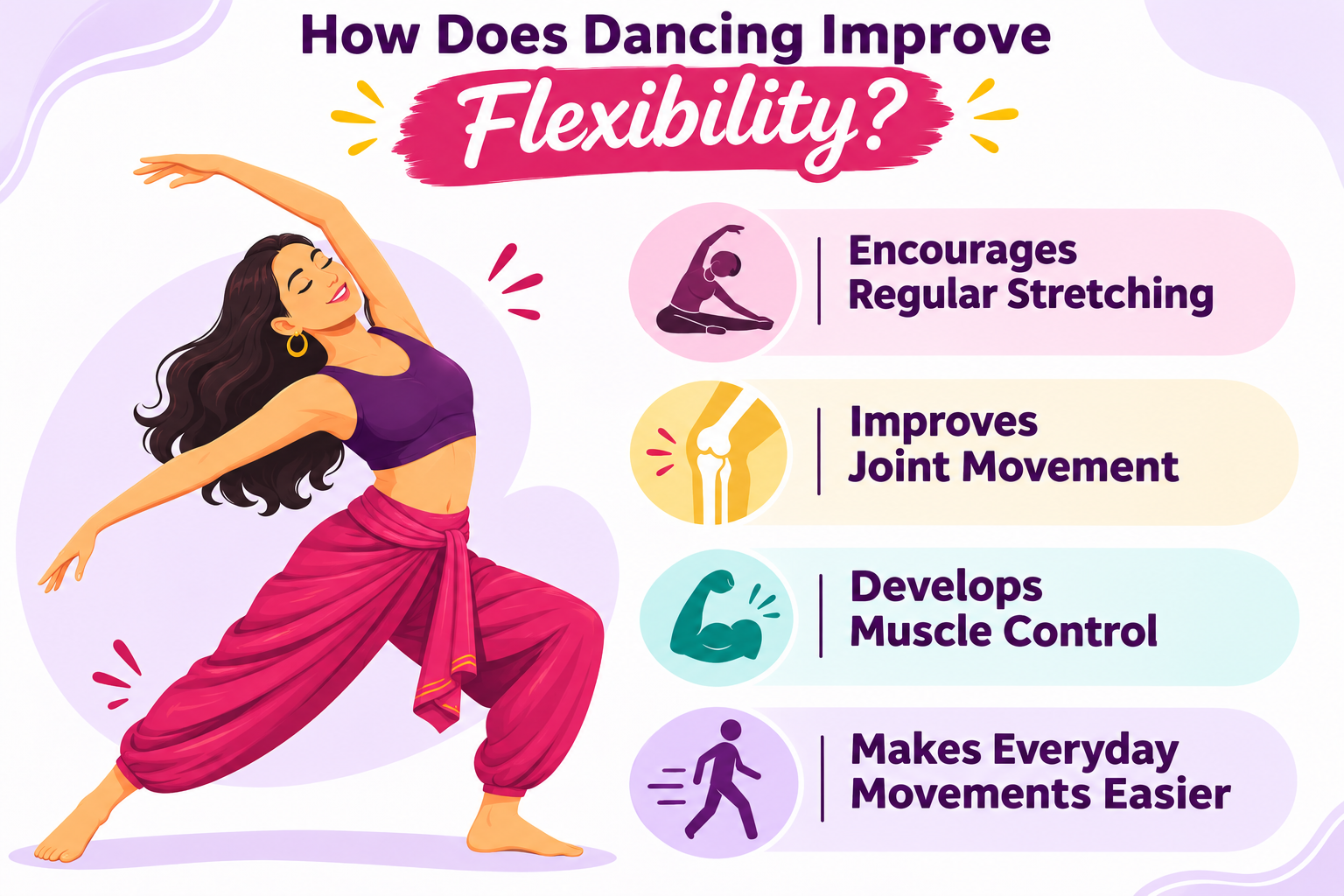
Here is how regular dance practice can support flexibility:
Encourages Regular Stretching
Many dance routines include stretches for the arms, legs, back and shoulders. These movements help gradually improve the body's range of motion when performed consistently and correctly.
For example, a dancer practising a leg extension or a graceful arm movement needs to stretch specific muscle groups while maintaining control.
Improves Joint Movement
Different dance styles involve bending the knees, extending the legs, rotating the shoulders and moving the hips. Practising these movements within a comfortable range can help maintain joint mobility.
Develops Muscle Control
Flexibility is not just about stretching as far as possible. It also involves controlling your muscles while moving through different positions.
Dance encourages students to stretch, hold and transition between movements, helping them develop better control over their bodies.
Makes Everyday Movements Easier
As flexibility improves, everyday activities such as bending down, reaching overhead or climbing stairs may feel more comfortable. The extent of improvement depends on the individual's starting point and practice routine.
Try this: Before a dance session, begin with gentle shoulder rolls, side stretches and ankle movements. Avoid forcing a stretch or pushing your body into an uncomfortable position.
2. How Does Dancing Help Develop Better Balance?
Balance is the ability to maintain control of your body while standing still or moving. It plays an important role in activities such as walking, running, climbing stairs and changing direction.
Dance constantly challenges balance because dancers frequently shift their weight, change positions and move from one foot to another.
Here are some ways dance practice can help develop balance.
Practises Weight Shifting
Many dance steps involve transferring body weight from one leg to another. This teaches dancers to maintain stability while changing their position.
For instance, Bollywood dance routines often include side steps, turns and directional changes that require controlled weight transfer.
Strengthens Core Engagement
The core muscles help stabilize the body during movement. Dance steps that involve turning, bending or maintaining a particular posture encourage dancers to engage these muscles.
A stronger and more controlled core can contribute to better stability during physical activities.
Improves Single-Leg Stability
Several dance movements require standing on one leg while extending or moving the other. Practising these movements can challenge and develop balance over time.
Classical dance styles such as Bharatanatyam and Kathak also involve controlled footwork, postures and transitions that require body stability.
Develops Postural Awareness
Dancers learn to pay attention to their posture, alignment and body positioning. This awareness can help them understand how to maintain stability while performing different movements.
Try this: Stand on one leg for a few seconds while keeping your posture upright. Repeat on the other leg. Practise near a wall or stable support if needed, and gradually increase the duration as your confidence improves.
3. How Does Dancing Improve Coordination?
Coordination is the ability to use different parts of the body together to perform a movement smoothly.
Think about a dance routine that requires you to move your arms, step in a particular direction and turn your head at the same time. Each movement needs to happen at the right moment.
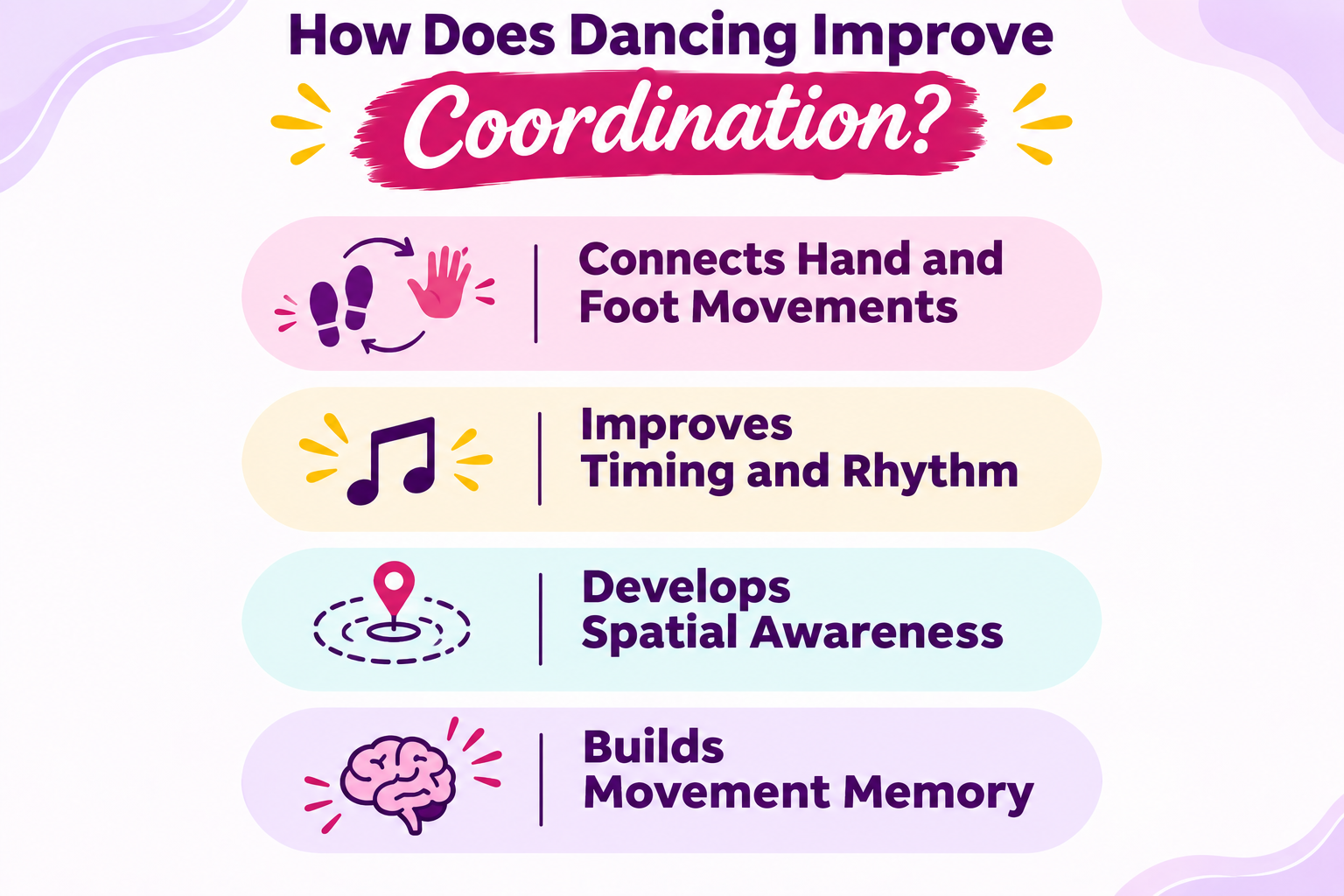
This is where dance becomes especially useful.
Connects Hand and Foot Movements
Dance routines often involve separate movements for the upper and lower body. For example, you may need to move your arms in one direction while stepping in another.
Practising these combinations helps develop the ability to coordinate different body movements.
Improves Timing and Rhythm
Dancers need to match their movements with the music. They learn to recognise beats, follow musical patterns and perform steps at the correct time.
This connection between movement and music helps develop rhythmic awareness.
Develops Spatial Awareness
Dance teaches you to understand where your body is positioned in relation to the floor, other dancers and the surrounding space.
Group choreography, formations and directional changes provide opportunities to practise this skill.
Builds Movement Memory
Remembering a dance sequence involves learning and repeating a series of movements in the correct order.
With regular practice, dancers become more comfortable recalling steps and connecting them into a complete routine.
Try this: Choose a simple four-count dance sequence. Practise the footwork first, then add arm movements. Once both feel comfortable separately, combine them with the music.
4. What Are the Benefits of Dancing Beyond Physical Fitness?
The benefits of dancing are not limited to flexibility, balance and coordination. It also brings together music, movement, creativity and self-expression.
Some additional advantages include:
These advantages of dance can make it a rewarding activity for people across different age groups.
The experience may differ depending on the dance style, session intensity, frequency of practice and individual fitness levels.
5. Which Dance Styles Help Improve Flexibility, Balance and Coordination?
Different dance styles involve different movement patterns. Some focus more on controlled postures and footwork, while others involve energetic steps, turns and full-body movements.
Here are a few styles beginners can explore:
There is no single dance style that is best for everyone. The right choice depends on your interests, comfort level and learning goals.
For example, someone who enjoys expressive storytelling may prefer Bharatanatyam or Kathak, while someone who enjoys energetic music may find Bollywood dance more engaging.
6. What Are the Benefits of Learning Dance at Different Ages?
Dance is an activity that can be adapted to different ages and abilities. The movements, intensity and learning approach can change depending on the student's requirements.
For Children
For children, dancing offers an enjoyable way to explore movement and music.
Some benefits of learning dance during childhood include:
- Developing basic movement and coordination skills.
- Improving awareness of body posture and space.
- Learning to follow instructions and remember sequences.
- Building confidence through practice and performance.
- Encouraging creativity and self-expression.
For Teenagers
Dance can provide teenagers with an opportunity to stay active while exploring their interests.
Learning choreography, practising with peers and performing routines can help develop discipline, coordination and confidence.
For Adults
Adults can take up dancing as a hobby, a fitness activity or a way to explore a creative interest.
Regular sessions can encourage movement, improve body awareness and provide an enjoyable break from everyday routines.
For Older Adults
Gentle, age-appropriate dance sessions can encourage mobility, movement awareness and balance practice.
The choice of movements should take individual fitness levels and any physical limitations into account. People with balance concerns or existing injuries should seek suitable guidance before starting.
7. How Often Should You Dance to See Improvement?
Consistency matters more than trying to learn too many steps in a short period.
If you are a beginner, start with short sessions and gradually build your practice routine.
Here is a simple weekly dance schedule you can follow:
This is a sample routine rather than a fixed requirement. Beginners should adjust the duration according to their comfort and fitness levels.
Remember to warm up before dancing and cool down afterwards. Wear comfortable clothing and practise on a safe, non-slippery surface.
8. Simple Dance Exercises Beginners Can Try at Home
You do not need complicated choreography to start experiencing the benefits of dancing. A few simple movements can help you become more comfortable with rhythm and body control.
1. Side Steps
Step to the right, bring your other foot towards it, and repeat on the left. Add a simple arm movement once you are comfortable.
Focus: Coordination and weight shifting.
2. Gentle Leg Extensions
Hold a stable support if needed and slowly extend one leg forward or sideways within a comfortable range.
Focus: Controlled movement and flexibility.
3. Marching to Music
Choose a song with a steady beat and march in place. Try moving your arms in time with your steps.
Focus: Rhythm and coordination.
4. Controlled Turns
Practise small, slow turns while maintaining a comfortable posture. Start with minimal rotation and avoid spinning quickly.
Focus: Balance and body awareness.
5. Simple Hand and Foot Combinations
Practise a basic step while moving your arms in a different pattern. Start slowly before combining both movements with music.
Focus: Upper- and lower-body coordination.
These exercises are suitable starting points, not a substitute for personalised dance instruction. Stop if you experience pain, dizziness or discomfort.
Learn Dance with Spardha School of Music
The best way to develop your dancing skills is to practise regularly and learn movements with proper guidance.
At Spardha School of Music, we offer live, one-on-one online dance classes for children and adults. Students can explore dance forms such as Bharatanatyam, Kathak and Bollywood dance through structured lessons.
Our classes help students understand basic movements, improve their technique and gradually progress towards more advanced choreography. Whether you are starting dance as a hobby or looking to develop your existing skills, you can learn at a pace that suits you.
Explore our online dance classes at Spardha School of Music and take your first step towards learning dance.
Conclusion
Dance brings together movement, music and expression in a way that makes physical activity enjoyable. From stretching and controlled postures to rhythmic footwork and turns, regular practice gives the body opportunities to develop flexibility, balance and coordination.
The benefits of dancing go beyond learning choreography. It can also encourage body awareness, confidence, creativity and consistent physical activity.
You do not need to be an experienced dancer to begin. Start with simple movements, choose a style you enjoy and give yourself time to improve. With regular practice and the right guidance, dancing can become a rewarding part of your routine.
Frequently Asked Questions
What are the main benefits of dancing?
The main benefits of dancing include improved flexibility, balance, coordination, body awareness and physical fitness. It can also support confidence, creativity and social interaction.
Can dancing improve flexibility?
Yes. Dance involves stretching, bending, extending and moving different joints through varied ranges of motion. Regular, controlled practice can help improve flexibility over time.
How does dancing improve balance?
Dance involves shifting body weight, standing on one leg, turning and changing positions. These movements challenge the body's stability and can help develop better balance.
Does dancing help with coordination?
Yes. Dancers often need to coordinate their arms, legs, head movements and footwork while following music. Practising these combinations can improve movement coordination.
What are the benefits of dance for children?
Dance can help children develop movement skills, coordination, body awareness, memory and confidence. It also provides an opportunity for creative expression and social interaction.
What are the advantages of dance for adults?
The advantages of dance for adults include an enjoyable way to stay active, practise coordination, improve body awareness and explore creativity. It can also be a social and recreational activity.
Which dance style is best for improving flexibility?
Styles such as contemporary dance and Bharatanatyam involve stretches, controlled positions and varied movements. However, flexibility improvements depend on the individual and how consistently they practise.
Can beginners learn dance at home?
Yes. Beginners can start with basic steps, simple choreography and gentle movements at home. Structured lessons can help them learn correct techniques and progress safely.
How many days a week should I practise dancing?
Beginners can start with two or three sessions per week and gradually increase their practice based on comfort and fitness levels. Consistency is more important than intensity.
What are the benefits of learning dance?
The benefits of learning dance include developing movement control, rhythm, coordination, flexibility and confidence. It also helps students explore music, creativity and different forms of expression.